THE MET
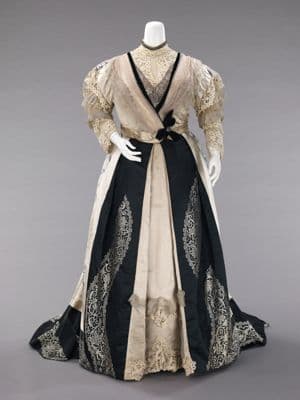
Black and Cream Silk Taffeta Wrap Evening Dress
Edwardian · 1900s · American
Production
haute couture
Material
silk taffeta
Culture
American
Influences
S-curve silhouette · Worth evening gown construction
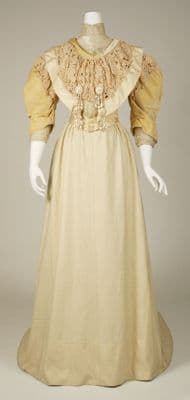
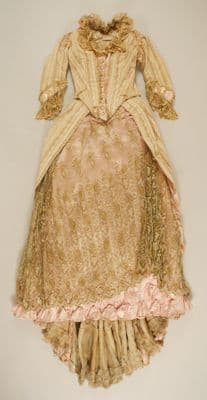
This Edwardian evening gown features a distinctive wrap-style bodice with deep V-neckline and black trim binding. The cream silk bodice has elaborate puffed sleeves with intricate lace or embroidered detailing at the shoulders and cuffs. The black silk skirt displays ornate gold embroidered or brocaded panels running vertically down the front and sides, creating dramatic contrast against the dark ground. The skirt extends into a substantial train typical of formal evening wear. The wrap construction of the bodice, secured with ties at the waist, reflects the period's emphasis on the S-curve silhouette while allowing for elegant draping of the luxurious silk fabrics.
dressfit and flarev-neckfloor length
Connected To
Worn with·chemiseWorn with·corsetTechnique·couture-constructionFunction·
Echoes Across Time
Edwardian → 1950s · 50yr56%
SHARED
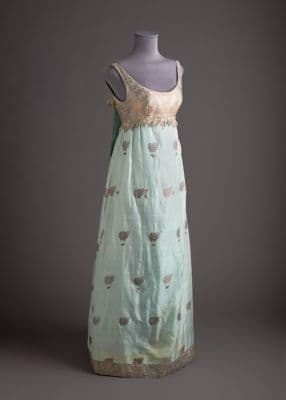
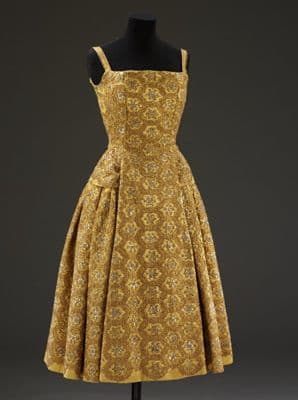
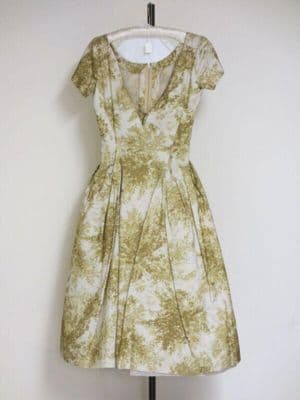
The Edwardian gown's theatrical wrap construction—that dramatic black sash cutting across cream silk like a sartorial stage direction—finds its DNA in the 1950s dress's own wrap bodice, though fifty years have compressed all that Belle Époque drama into something you could actually sit down in. Both dresses understand that the most flattering line isn't straight but diagonal, using that cross-body wrap to create an hourglass where nature might not have provided one.
Worn with·petticoatTechnique·couture-constructionFunction·court-formal
Pull the Thread→
Follow this garment wherever the graph leads