Empire / Regency · 1960s · American
Designer
Ann Lowe
Production
haute couture
Material
silk taffeta brocade
Culture
American
Influences
Empire waistline · 1950s New Look volume
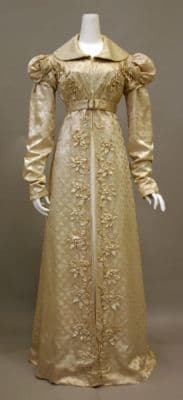
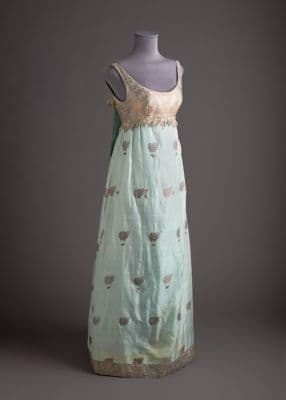
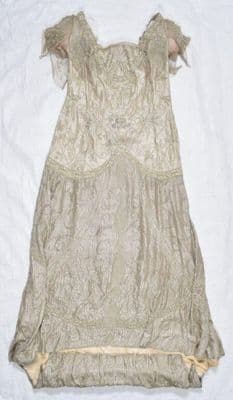
This formal evening gown features a fitted bodice with wide shoulder straps and a scooped neckline, transitioning to a full-length A-line skirt. The pale mint green silk taffeta is decorated with an allover brocaded pattern of stylized floral or leaf motifs in gold and cream tones. A wide golden sash or belt defines the natural waistline, creating an empire-influenced silhouette characteristic of early 1960s formal wear. The substantial weight of the brocaded taffeta creates structured volume in the skirt while maintaining clean lines. The construction demonstrates sophisticated couture techniques with precise seaming and professional finishing, reflecting Ann Lowe's renowned craftsmanship in high-end formal wear during this period.
Both gowns speak the same Empire language—that high waistline that sits just under the bust, creating the long, lean silhouette Napoleon's court adored. The pale mint dress with its scattered motifs and the golden redingote with its elaborate front closure both rely on silk brocade's ability to catch light and create texture, though the American piece whispers where the French one declaims.

Both gowns speak the same Empire language—that high waistline that sits just under the bust, creating the long, lean silhouette Napoleon's court adored. The pale mint dress with its scattered motifs and the golden redingote with its elaborate front closure both rely on silk brocade's ability to catch light and create texture, though the American piece whispers where the French one declaims.


Follow this garment wherever the graph leads
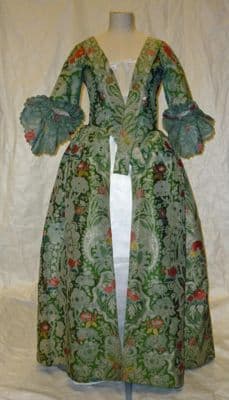
These two gowns reveal how the same luxurious impulse—silk brocade scattered with delicate florals—can serve radically different silhouettes across centuries. The earlier English robe à l'anglaise spreads its botanical motifs across acres of fabric designed to showcase wealth through sheer volume, its fitted bodice and massive skirts demanding the architectural support of stays and panniers.
These gowns are separated by a century and an ocean, yet both speak the same language of imperial formality—the high-waisted Regency dress with its delicate bee motifs scattered across mint silk taffeta, and the 1930s court presentation gown draped in silver lamé like liquid metal.
Both dresses speak the same Empire language—that high-waisted, column-of-fabric grammar that Napoleon's court made fashionable—but they're separated by both centuries and continents. The Regency gown does it with period-correct restraint: pale mint silk scattered with what look like small motifs, the bodice fitted just so before releasing into that characteristic A-line sweep.
These two gowns reveal how the same luxurious impulse—silk brocade scattered with delicate florals—can serve radically different silhouettes across centuries. The earlier English robe à l'anglaise spreads its botanical motifs across acres of fabric designed to showcase wealth through sheer volume, its fitted bodice and massive skirts demanding the architectural support of stays and panniers.