V&A
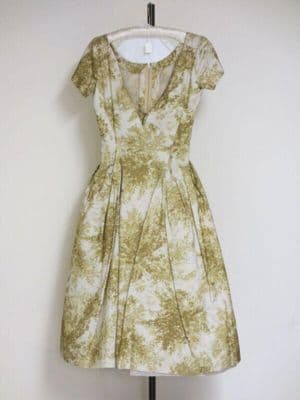
Olive Green Silk Brocade Fit and Flare Dress
1950s · 1950s · French
Designer
Antonio Castillo for Lanvin
Production
haute couture
Material
silk brocade
Culture
French
Movement
New Look / Post-War
Influences
Christian Dior New Look silhouette
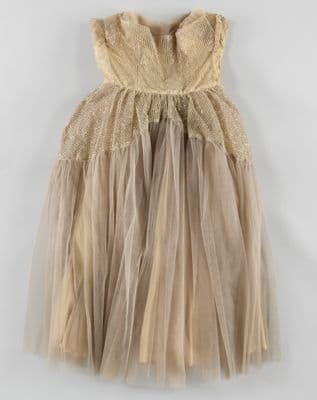
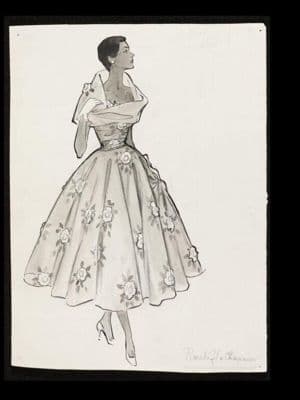
This 1950s cocktail dress features a fitted bodice with short cap sleeves and a scooped neckline, transitioning to a full A-line skirt that falls to mid-calf length. The silk fabric displays an elaborate floral brocade pattern in olive green and gold tones against a cream background, with large-scale botanical motifs covering the entire garment. The bodice appears to be darted for a close fit through the torso, while the skirt extends outward from the natural waistline in the characteristic silhouette of the era. The fabric's lustrous surface and intricate woven pattern suggest high-quality silk brocade construction typical of Parisian couture houses.
dressfit and flarescoop neckknee length
Connected To
Influences·Christian Dior New Look silhouetteMovement·New Look / Post-WarWorn with·petticoat
Echoes Across Time
Edwardian → 1950s · 50yr56%
SHARED
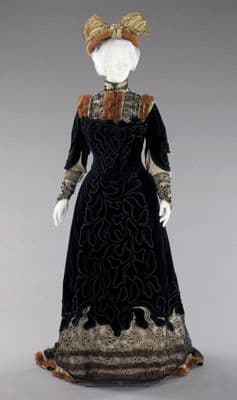
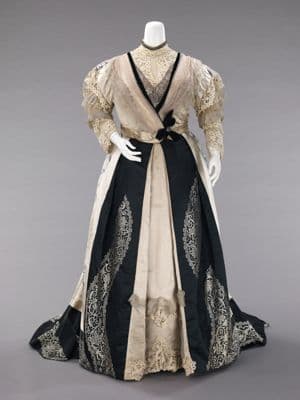
The Edwardian gown's theatrical wrap construction—that dramatic black sash cutting across cream silk like a sartorial stage direction—finds its DNA in the 1950s dress's own wrap bodice, though fifty years have compressed all that Belle Époque drama into something you could actually sit down in. Both dresses understand that the most flattering line isn't straight but diagonal, using that cross-body wrap to create an hourglass where nature might not have provided one.
Worn with·petticoatTechnique·couture-constructionFunction·court-formal
Pull the Thread→
Follow this garment wherever the graph leads