THE MET
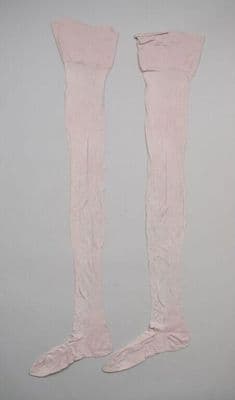
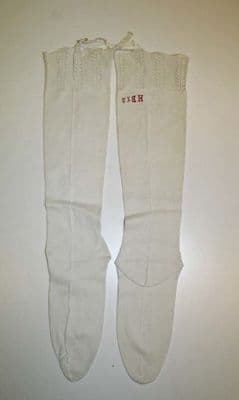
Cream Cotton Knee-High Stockings
Victorian Early / Crinoline · 1860s · Swiss
Production
mass-produced
Material
cotton
Culture
Swiss
A pair of cream-colored cotton stockings displaying the characteristic construction of mid-19th century hosiery. The stockings extend to knee height with a ribbed cuff at the top featuring drawstring ties for securing. The fabric shows a fine knitted gauge typical of machine-produced stockings from this period. Red embroidered initials or monogram are visible on one stocking, indicating personal ownership marking common in Victorian households. The foot portion shows reinforced construction at heel and toe areas. The overall shape follows the natural leg contour with fitted ankle tapering. These represent the transition from hand-knitted to machine-manufactured hosiery that characterized the 1860s textile industry.
tights/stockingstight fitknee length
Connected To
Worn with·chemiseWorn with·dressWorn with·petticoat
SHARED20 years · cross-culture · cross-category
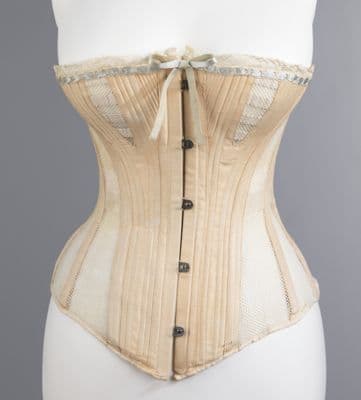
These two pieces of Victorian underwear reveal the era's obsession with creating the perfect silhouette through invisible architecture. The corset's precise vertical boning channels and back lacing system mirror the stockings' careful ribbed construction and seamed detailing — both garments demanding meticulous engineering to shape the body beneath layers of clothing.
Text77%
Image58%
Worn with·chemiseWorn with·corsetWorn with·petticoat
SHARED10 years · cross-culture · cross-category
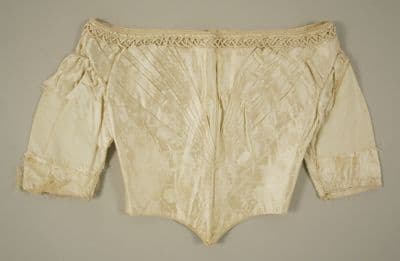
These two pieces of Victorian cotton underwear share the era's obsession with creating a perfectly smooth foundation beneath the dress, but they reveal how intimately structured that invisible architecture really was.
Worn with·chemiseWorn with·corsetWorn with·petticoat
SHARED10 years · cross-culture · cross-category
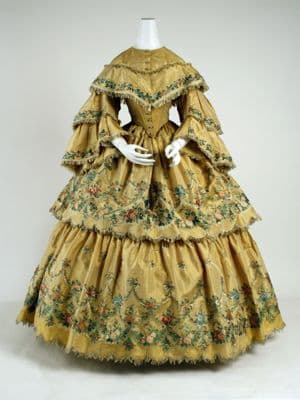
These cream cotton stockings and that golden silk taffeta gown are intimate partners in the elaborate theater of 1850s dressing—the stockings hidden beneath layers of chemise, corset, and petticoats, while the dress commands the room with its tiered ruffles and botanical trim.
Worn with·chemiseWorn with·drawers
SHARED45 years · cross-culture · cross-category
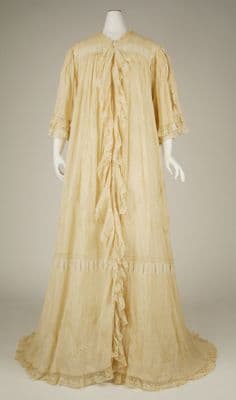
These two garments speak the same language of intimate Victorian propriety, though separated by decades and purpose. The negligée's buttoned front placket and the stockings' careful seaming both reveal that obsessive attention to construction that defined undergarments and private dress—even when no one would see them, every edge was finished, every closure considered.
Pull the Thread→
Follow this garment wherever the graph leads