THE MET
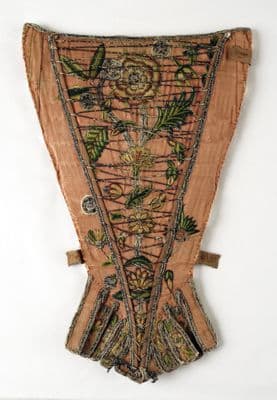
Salmon Pink Silk Brocade Triangular Stomacher
Rococo · 1720s · British
Production
handmade
Material
silk brocade
Culture
British
Influences
French court fashion · Spitalfields silk weaving
A triangular stomacher panel designed to fill the open front of an 18th-century gown bodice. The silk brocade features an elaborate woven pattern of large-scale floral motifs including roses and foliage in green and gold against a salmon pink ground. The stomacher tapers from a wide top to a narrow pointed bottom, following the characteristic inverted triangle silhouette. Side tabs with ties are visible for securing the piece within the bodice opening. The brocade pattern shows typical Rococo asymmetrical naturalistic design with flowing botanical elements. The fabric appears to be a figured silk with metallic threads creating dimensional texture in the floral motifs.
vesttight fit
Connected To
Influences·French court fashionWorn with·chemiseWorn with·stays
SHARED30 years · cross-category
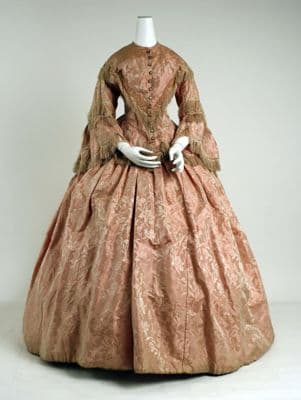
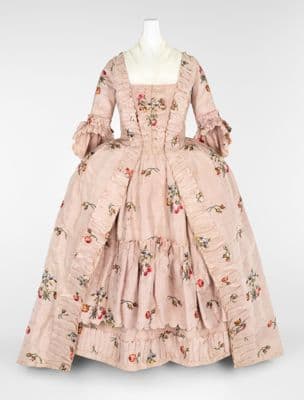
These two pieces reveal how 18th-century dress was an ecosystem of coordinated parts, each following the same visual logic. The stomacher's dense floral embroidery in metallic threads creates the same decorative intensity as the gown's scattered posies, both working that distinctly Rococo balance between delicacy and abundance.
Text78%
Image77%
Influences·French court fashionWorn with·chemiseWorn with·stays
SHARED20 years · cross-culture · cross-category
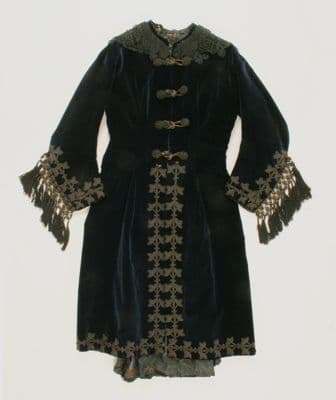
Both pieces speak the same rococo language of serpentine gold trim dancing across silk, but they reveal how differently American colonists and British subjects interpreted French court excess. The robe's methodical rows of braided frogs marching down forest velvet suggest a more restrained, almost military take on ornament, while the stomacher's riot of floral brocade and meandering metallic threads captures the full-throated botanical fantasy that made Versailles swoon.
54%
Worn with·chemiseWorn with·stays
SHARED100 years · cross-category
Text62%
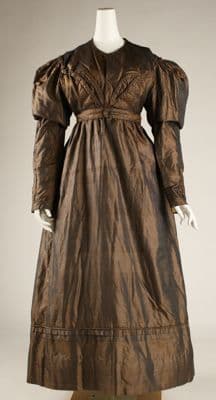
Worn with·chemiseWorn with·stays
SHARED100 years · cross-category
Text62%
Pull the Thread→
Follow this garment wherever the graph leads