Rococo · 1780s · American
Production
handmade
Material
silk brocade
Culture
American
Influences
English court dress · French formal gown construction
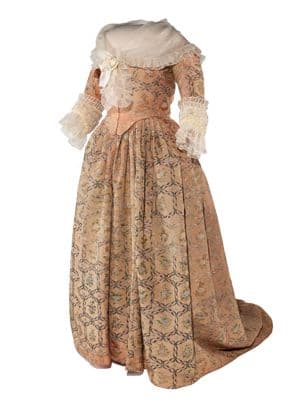
This formal gown features a fitted bodice with a square neckline and elbow-length sleeves finished with white ruffled engageantes. The coral pink silk brocade displays an intricate woven pattern of scrolling vines and floral motifs in gold and green threads. The bodice is closely fitted through the torso and extends into a pointed waist. The skirt falls in generous pleats from the waist, creating substantial volume that extends into a modest train. White silk or linen ruffles trim the neckline and sleeve edges, providing contrast against the richly patterned brocade. The construction demonstrates fine 18th-century tailoring techniques with precise fitting and professional finishing typical of formal American colonial dress.


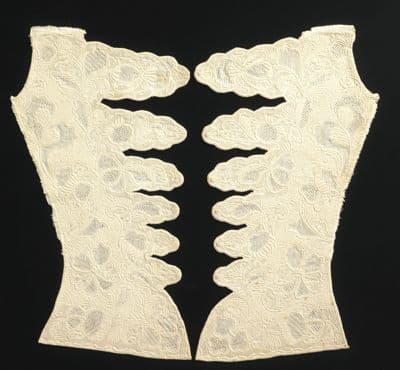
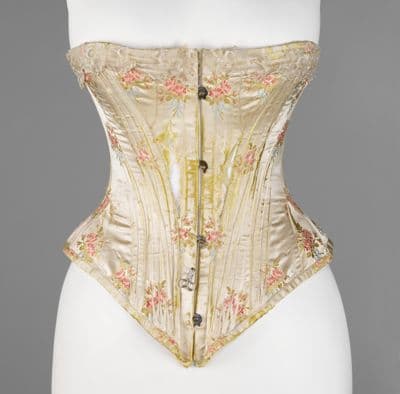
These pieces reveal how the same decorative impulse—those sinuous, scrolling curves—traveled across a century and an ocean, morphing from the intimate armor of 17th-century European undergarments to the public theater of 18th-century American society dress.

Follow this garment wherever the graph leads
These pieces reveal how the same decorative impulse—those sinuous, scrolling curves—traveled across a century and an ocean, morphing from the intimate armor of 17th-century European undergarments to the public theater of 18th-century American society dress.
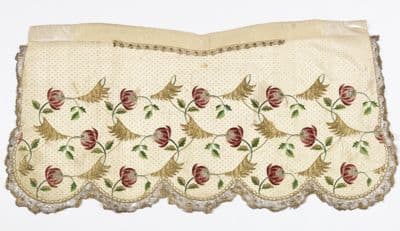
The coral silk brocade of Martha Washington's gown and the delicate rose pattern scattered across this French apron reveal how luxury textiles migrated from intimate undergarments to public dress across the Atlantic. Both fabrics share that distinctive 18th-century obsession with small-scale floral motifs woven in silk—the apron's burgundy roses echoing in miniature the botanical richness that would later bloom into the fuller, more confident patterns adorning American first ladies.
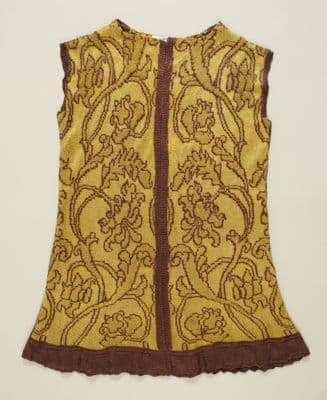
The golden spirals that snake across this Renaissance vest and Martha Washington's coral gown reveal how certain decorative languages transcend centuries—both use that restless, curving brocade vocabulary that speaks fluent luxury across nearly three hundred years.
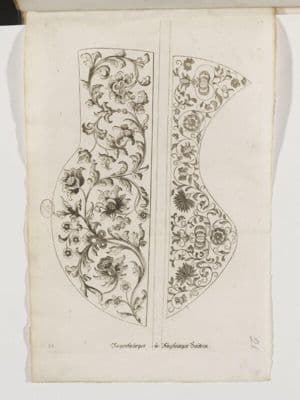
Martha Washington's coral silk gown and this German pattern book speak the same decorative language—both deploy those sinuous rococo scrolls that curl around stylized blooms like musical notation made textile. The engraving's meticulous spirals and rosettes could have been lifted directly from Washington's brocade, where similar motifs wind across the silk in that characteristic 18th-century horror vacui that demanded every inch be ornamented.

The coral silk brocade of Martha Washington's gown and the delicate rose pattern scattered across this French apron reveal how luxury textiles migrated from intimate undergarments to public dress across the Atlantic. Both fabrics share that distinctive 18th-century obsession with small-scale floral motifs woven in silk—the apron's burgundy roses echoing in miniature the botanical richness that would later bloom into the fuller, more confident patterns adorning American first ladies.