THE MET
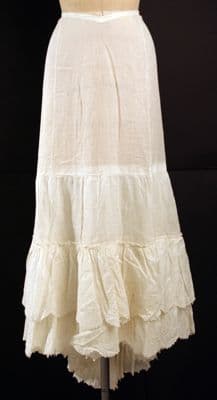
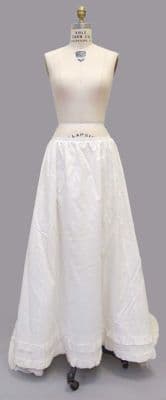
White Cotton Muslin Bustle Petticoat
Victorian Late / Bustle · 1860s-1880s · American
Production
handmade
Material
cotton muslin
Culture
American
Influences
1880s bustle silhouette
A white cotton muslin petticoat displayed on a dress form, showing the characteristic silhouette of the 1880s bustle period. The garment features a fitted waistband that extends into a dramatically full skirt with pronounced volume at the back. The cotton muslin fabric appears lightweight yet structured, likely reinforced with internal support elements typical of bustle-era undergarments. The skirt falls in generous folds to floor length, creating the foundation shape necessary for the fashionable bustle silhouette. The construction shows careful pleating or gathering at the waist to distribute the fabric volume. This utilitarian undergarment would have been worn beneath the outer dress to achieve the period's distinctive protruding posterior silhouette.
skirta-linefloor length
Connected To
Worn with·bustle padWorn with·chemiseWorn with·corset
SHARED10 years · cross-culture · cross-category
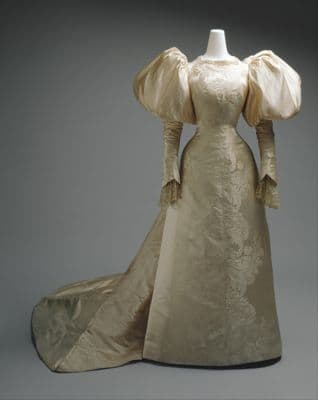
The Victorian bustle petticoat's engineered architecture of pleats and tapes creates the same dramatic silhouette that the Belle Époque wedding gown achieves through its trumpet shape and trailing train. What the undergarment builds through structural cotton engineering, the silk satin gown accomplishes through cut and drape—both demanding that a woman's body extend far beyond its natural boundaries.
Pull the Thread→
Follow this garment wherever the graph leads