THE MET
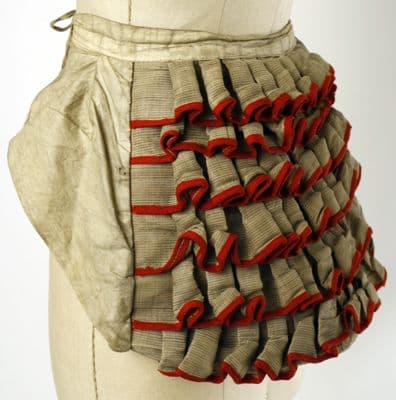
Cream Cotton Bustle Pad with Red Silk Ribbon
Victorian Late / Bustle · 1880s · European
Production
handmade
Material
cotton with silk ribbon trim
Culture
European
Influences
1870s bustle revival · Victorian undergarment engineering
This bustle pad features a cream cotton or linen base with horizontal rows of pleated fabric strips edged in bright red silk ribbon. The construction shows four tiers of gathered fabric creating dimensional volume, designed to project the skirt away from the body at the back. The base appears to have tie closures at the waist for securing around the torso. The pleated strips are precisely arranged in parallel rows, each finished with red ribbon binding that creates both structural support and decorative contrast. This type of bustle pad was essential foundation wear during the 1880s revival of the bustle silhouette, worn beneath the corset and petticoats to achieve the characteristic posterior projection of fashionable dress.
dressbell
Connected To
Worn with·chemiseWorn with·corsetWorn with·petticoatTechnique·pleating
SHARED40 years · cross-culture
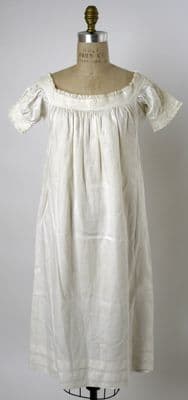
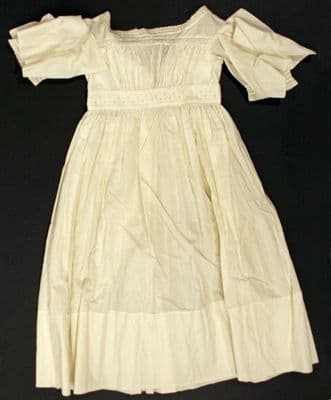
The soft cotton chemise with its gathered sleeves and drawstring waist represents the Romantic era's brief flirtation with natural silhouettes, while the bustle pad's rigid pleated tiers and red ribbon trim engineered the Victorian obsession with architectural posteriors four decades later. Both rely on precise pleating to create volume, but where the chemise gathers fabric to suggest the body beneath, the bustle constructs an entirely artificial form that defies anatomy.
Text71%
Worn with·chemiseWorn with·corsetWorn with·petticoat
SHAREDsame era · cross-culture · cross-category
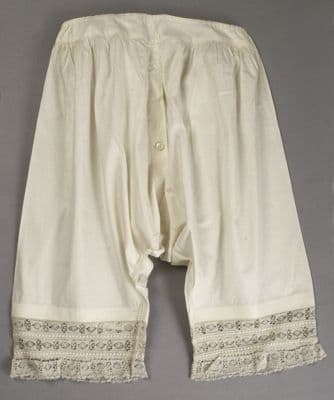
These two pieces reveal the hidden architecture of Victorian propriety, where even the most private layers demanded their own hierarchy of refinement. The drawers, with their delicate lace trim and careful button closure, show how underwear had evolved from purely functional to subtly decorative—a luxury that only the wearer would know.
Worn with·chemiseWorn with·corsetWorn with·petticoat
SHAREDsame era · cross-culture · cross-category
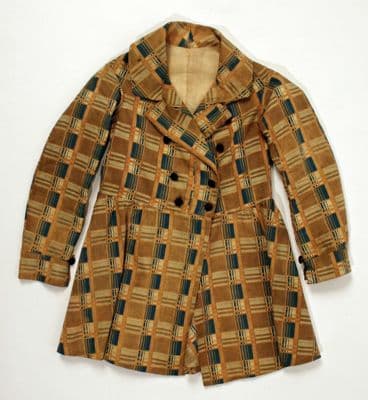
That golden plaid coat with its sharp-shouldered silhouette and fitted waist tells the story of how Victorian women dressed their newly engineered bodies, but it's the cream cotton bustle pad with its tiers of red-ribboned pleats that reveals the architectural truth underneath.
Worn with·chemiseWorn with·corsetTechnique·pleating
SHAREDsame era · cross-culture · cross-category
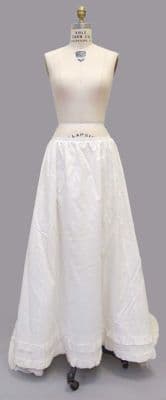
These two pieces reveal the Victorian bustle's split personality: the white petticoat creates volume through yards of gathered cotton that would balloon beneath a dress, while the cream pad with its pleated tiers and red ribbon piping offers a more engineered approach to the same silhouette.
Echoes Across Time
Romantic → Victorian Late / Bustle · 40yr63%
SHARED
The soft cotton chemise with its gathered sleeves and drawstring waist represents the Romantic era's brief flirtation with natural silhouettes, while the bustle pad's rigid pleated tiers and red ribbon trim engineered the Victorian obsession with architectural posteriors four decades later. Both rely on precise pleating to create volume, but where the chemise gathers fabric to suggest the body beneath, the bustle constructs an entirely artificial form that defies anatomy.
Worn with·chemiseWorn with·corsetWorn with·petticoat
Pull the Thread→
Follow this garment wherever the graph leads