THE MET
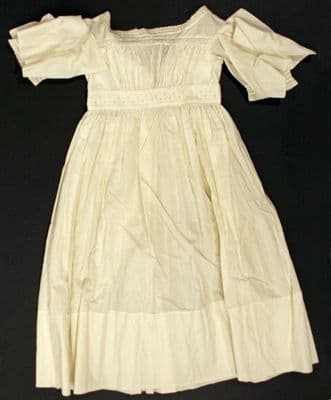
Cream Cotton Chemise Dress with Puffed Sleeves
Romantic · 1840s · American
Production
handmade
Material
cotton
Culture
American
Influences
1840s romantic silhouette · off-shoulder sleeve styling
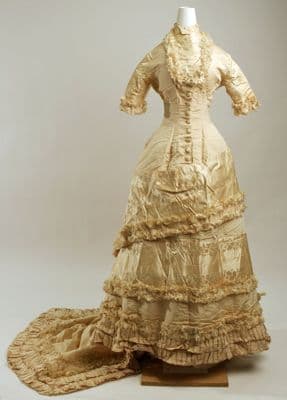
This cream cotton dress exemplifies Romantic era styling with its fitted bodice featuring a square neckline and short puffed sleeves that extend off the shoulder. The bodice shows vertical pintucking or pleating detail down the center front, creating structured decoration typical of 1840s construction. The waistline sits at the natural waist with gathered fullness transitioning into a long, full skirt that would have been supported by multiple petticoats. The sleeves demonstrate the period's preference for rounded, feminine silhouettes. The cotton fabric appears to be a plain weave, practical for daily wear while maintaining the era's emphasis on romantic, flowing forms. Construction details suggest hand-sewing techniques throughout.
dressstraightsquare necklinefloor length
Connected To
Worn with·chemiseWorn with·corsetWorn with·petticoatTechnique·
Echoes Across Time
Romantic → Victorian Late / Bustle · 40yr63%
SHARED
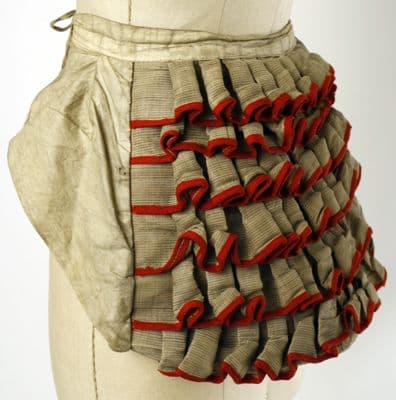
The soft cotton chemise with its gathered sleeves and drawstring waist represents the Romantic era's brief flirtation with natural silhouettes, while the bustle pad's rigid pleated tiers and red ribbon trim engineered the Victorian obsession with architectural posteriors four decades later. Both rely on precise pleating to create volume, but where the chemise gathers fabric to suggest the body beneath, the bustle constructs an entirely artificial form that defies anatomy.
Worn with·chemiseWorn with·corsetWorn with·petticoat
Pull the Thread→
Follow this garment wherever the graph leads