SMITHSONIAN
Champagne Silk Satin Miniature Evening Gown
1990s · 1960s · American
Designer
Ann Lowe
Production
one-of-a-kind
Material
silk satin
Culture
American
Movement
Supermodel Era
Influences
Victorian Late / Bustle era evening wear · First Lady formal protocol dress
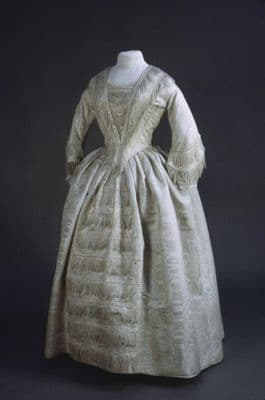
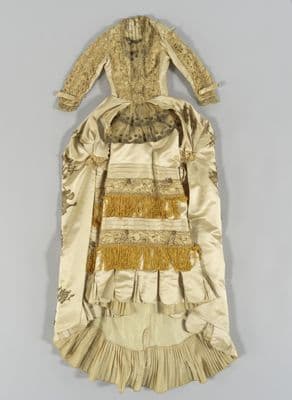
This miniature reproduction showcases a formal Victorian-inspired evening gown with a fitted long-sleeved bodice featuring intricate lace or embroidered detailing throughout. The garment displays a high neckline and close-fitting sleeves that extend to the wrists. The skirt portion features multiple tiers of elaborate trim work, including what appears to be fringe or tasseled elements arranged in horizontal bands across the lower portion. The silhouette includes a dramatic trained skirt that extends behind the bodice, characteristic of formal 19th-century evening wear. The construction demonstrates meticulous attention to historical accuracy in its reproduction, with the champagne-colored silk satin providing a lustrous foundation for the ornate surface treatments and trim work that define the garment's formal character.
dressfit and flarefloor length
Connected To
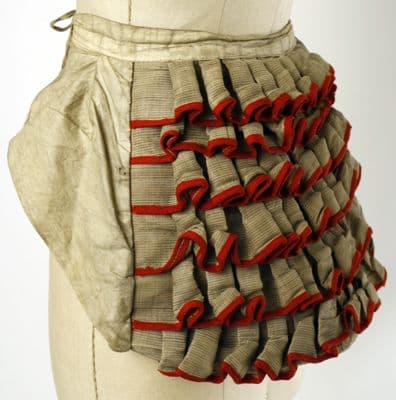
Worn with·bustle padWorn with·chemiseWorn with·corset
Echoes Across Time
Victorian Late / Bustle → 1990s · 80yr65%
SHARED
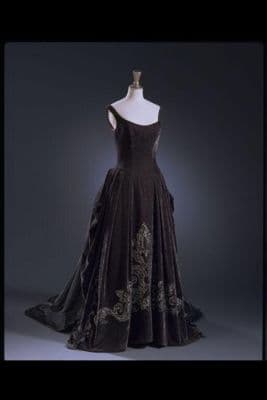
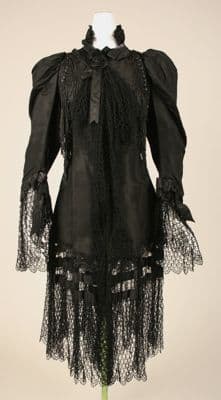
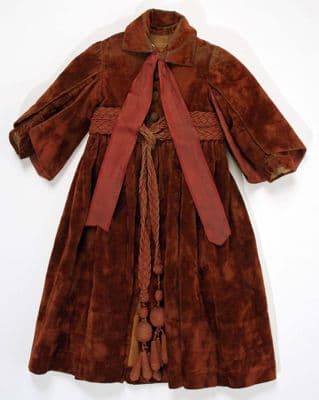
These two garments reveal how the bustle's architectural drama never really left fashion's DNA, just shifted scale and context. The Victorian ensemble's cascading rust velvet with its elaborate bow treatment and structured silhouette finds an echo in the 1990s gown's champagne satin layers that tumble into tiers of fringe and pleated ruffles — both using fabric manipulation to create that distinctive posterior emphasis.
Worn with·bustle padWorn with·chemiseWorn with·corset
Pull the Thread→
Follow this garment wherever the graph leads