THE MET
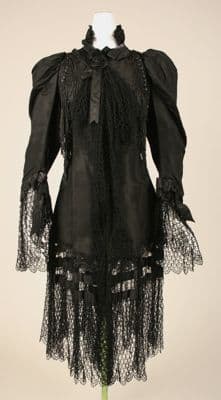
Black Silk Mourning Coat with Lace Trim
Victorian Late / Bustle · 1880s · French
Production
handmade
Material
silk with black lace trim
Culture
French
Influences
Victorian mourning dress conventions · 1880s gigot sleeve styling
A black silk coat featuring the characteristic silhouette of 1880s mourning dress. The garment displays dramatically puffed sleeves that taper to fitted cuffs adorned with cascading black lace trim. The bodice is closely fitted through the torso with a high neckline and center-front button closure. Multiple tiers of black lace create a layered, textural effect at the cuffs and hemline. The coat's construction demonstrates typical Victorian mourning dress conventions, with its somber black coloration and elaborate lace detailing that would have signified both grief and social status. The sleeve construction shows the period's emphasis on upper arm volume while maintaining a refined silhouette appropriate for formal mourning attire.
coatfit and flarehigh neckknee length
Connected To
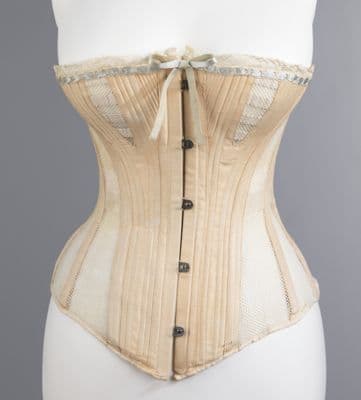
Worn with·bustleWorn with·chemiseWorn with·petticoat
SHAREDsame era · cross-culture · cross-category
Echoes Across Time
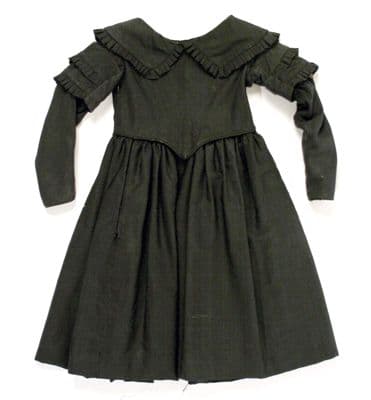
Victorian Late / Bustle → Victorian Early / Crinoline · 40yr58%
SHARED
These two garments trace the evolution of Victorian mourning dress from solemn restraint to theatrical excess. The earlier green dress adheres to the austere codes of 1850s mourning—its deep forest tone suggesting half-mourning, with ruffled shoulder details that whisper rather than shout—while the later black coat explodes into full Gothic drama with cascading lace tiers and exaggerated leg-of-mutton sleeves that turn grief into performance.
Worn with·chemiseWorn with·corsetFunction·mourning
Pull the Thread→
Follow this garment wherever the graph leads