THE MET
Cream Cotton Tiered A-Line Petticoat Underskirt
Fin de Siecle / Gibson Girl · 1890s · American or European
Production
handmade
Material
cotton
Culture
American or European
Influences
Victorian petticoat construction · tiered ruffled undergarments
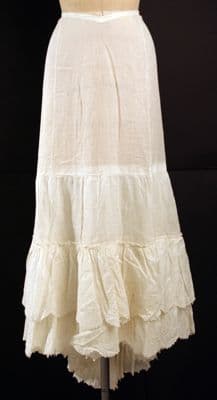
A full-length cotton underskirt featuring three distinct horizontal tiers that create volume and structure beneath outer garments. The garment is constructed with a fitted waistband and flows into increasingly full tiers, each separated by gathered seams. The bottom tier displays elaborate scalloped edging with decorative cutwork or embroidered details along the hem. The cotton fabric appears to be a sturdy plain weave, suitable for frequent laundering. This construction method was typical of Victorian undergarments, designed to provide the proper silhouette for fashionable dress while remaining practical for daily wear. The tiered design allows for maximum fullness at the hem while maintaining a smooth line at the waist.
skirta-linefloor length
Connected To
Worn with·chemiseWorn with·corsetWorn with·outer dress
SHAREDsame era · cross-culture
Pull the Thread→
Follow this garment wherever the graph leads