V&A
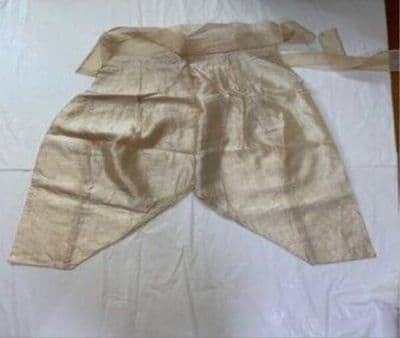
Cream Cotton Korean Hanbok Petticoat
Roaring Twenties / Art Deco · 1920s · Korean
Production
handmade
Material
cotton
Culture
Korean
Influences
traditional Korean hanbok construction
This Korean hanbok petticoat (sokchima) displays the characteristic wide, gathered silhouette essential to traditional Korean women's dress. The cream-colored cotton fabric shows natural aging and creasing patterns typical of well-used undergarments. The construction features a fitted waistband with extensive gathering that creates the bell-shaped volume necessary to support the outer hanbok skirt (chima). The fabric appears to be a plain weave cotton of medium weight, practical for daily wear. The garment extends to approximately knee length when laid flat, though it would create a fuller silhouette when worn. Multiple vertical creases indicate the gathered construction method, where fabric panels are pleated into the waistband to achieve maximum circumference while maintaining a smooth waist fit.
dressa-lineknee length
Connected To
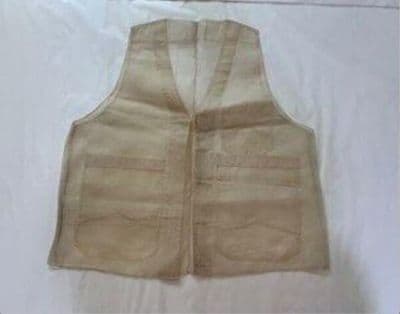
Worn with·hanbok chimaWorn with·hanbok jeogori
SHARED60 years · cross-category
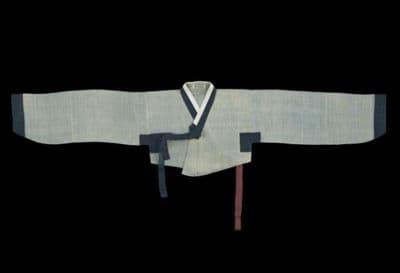
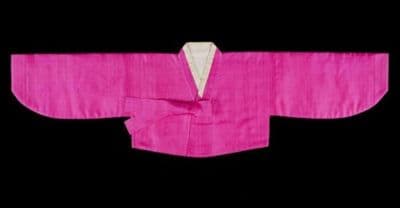
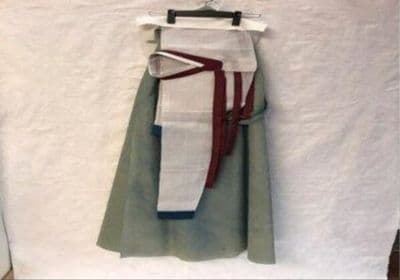
These two hanbok undergarments reveal how Korean traditional dress maintained its essential geometry even as it adapted to modern life. The 1920s petticoat, with its wide-legged silhouette and practical cotton construction, shows how hanbok's foundational shapes persisted beneath Western-influenced outer layers during the colonial period.
Pull the Thread→
Follow this garment wherever the graph leads