V&A
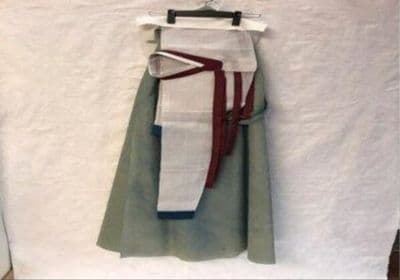
Sage Green Ramie Korean Hanbok Ensemble
Korean Traditional · 1980s · Korean
Production
handmade
Material
ramie
Culture
Korean
Influences
traditional Korean hanbok construction
This Korean hanbok ensemble features the traditional two-piece construction of jeogori (jacket) and chima (skirt). The sage green chima displays the characteristic full, bell-shaped silhouette that falls from a high waistline, created by gathered pleats at the waistband. The cream-colored jeogori shows the typical short, fitted bodice with curved front panels and what appears to be traditional tie closures (goreum) in burgundy. The ramie fabric provides structure while maintaining the flowing drape essential to hanbok aesthetics. The ensemble represents formal Korean dress adapted for 1980s wear, maintaining traditional proportions and construction methods while using refined natural fiber.
dressa-linemidi
Connected To
Influences·traditional Korean hanbok constructionWorn with·chimaWorn with·jeogori
SHARED60 years · cross-category
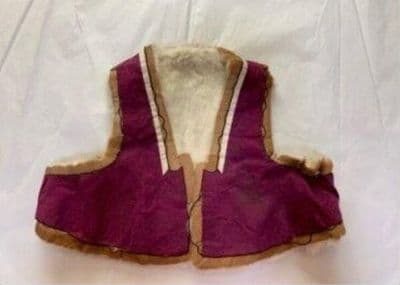
That sumptuous purple vest carries the DNA of hanbok tailoring in its clean, curved armholes and the way it sits open at the front, but it's been stripped down to Art Deco essentials — all geometric lines and that rich jewel tone that screams 1920s modernity.
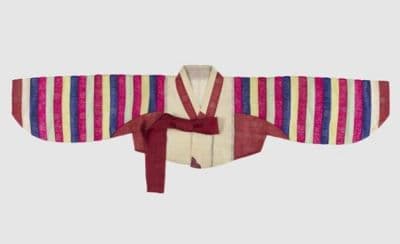
Influences·traditional Korean hanbok constructionWorn with·undergarmentsFunction·religious-ceremonial
SHARED50 years · cross-category
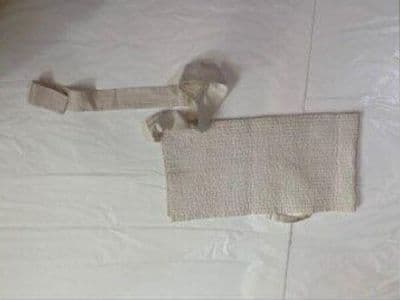
Worn with·chimaWorn with·jeogori
SHARED60 years
The cream cotton undergarment's spare geometric lines and that decisive horizontal band read like Korean minimalism filtered through 1920s modernity, while the sage ensemble below maintains hanbok's classical proportions with its voluminous chima and crisp white jeogori. What connects them across six decades is hanbok's essential architecture—that interplay of structure and flow, the way fabric is engineered to move with the body rather than cling to it.
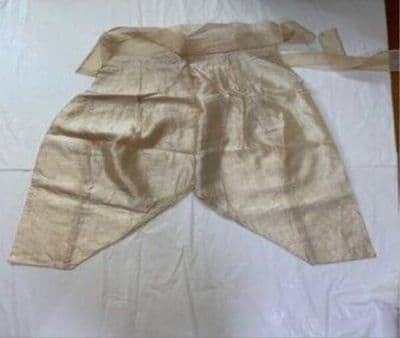
Influences·traditional Korean hanbok constructionTechnique·pleating
SHARED60 years
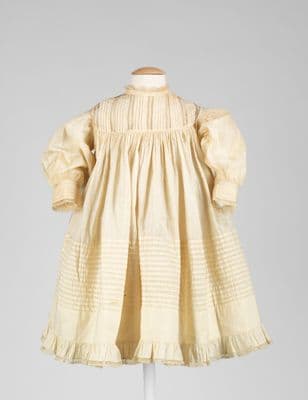
These two pieces reveal how hanbok's essential geometry—that distinctive gathered waistline and voluminous silhouette—remained constant even as Korea navigated between tradition and modernity in the early 20th century.
Pull the Thread→
Follow this garment wherever the graph leads