V&A
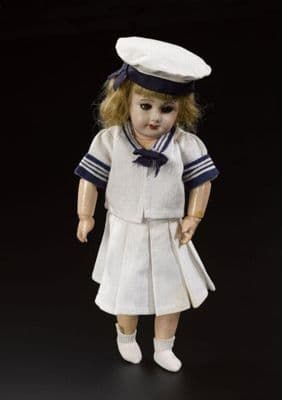
White Cotton Sailor Dress with Navy Trim
1950s · 1940s · French
Production
handmade
Material
cotton
Culture
French
Movement
New Look / Post-War
Influences
traditional sailor suit styling
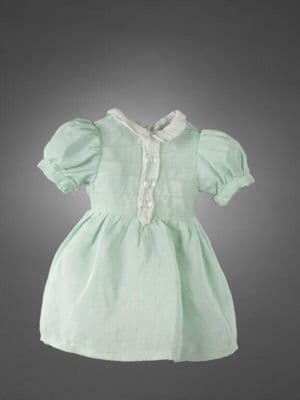
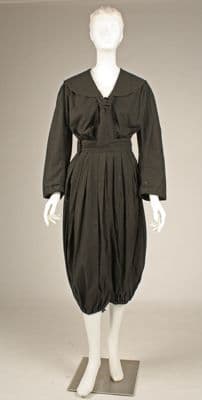
A miniature sailor-style dress designed for a doll, featuring a white cotton bodice with navy blue collar trim and matching cuffs. The short-sleeved top has a traditional sailor collar with navy piping and a navy necktie. The attached skirt is pleated and falls to mid-thigh length. A white sailor hat with navy band completes the ensemble. The construction shows careful attention to scaled-down tailoring details, with precise pleating and trim work. This represents the post-war revival of classic nautical styling in children's fashion, reflecting the optimistic return to traditional feminine silhouettes during the New Look period.
dressfit and flareround neckabove-the-knee
Connected To
Worn with·sailor hat
SHARED40 years · cross-culture · cross-category
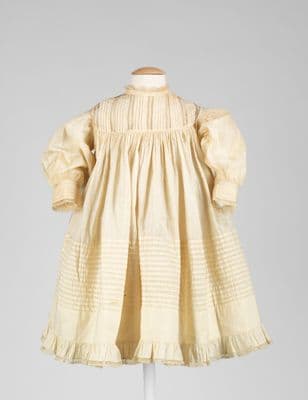
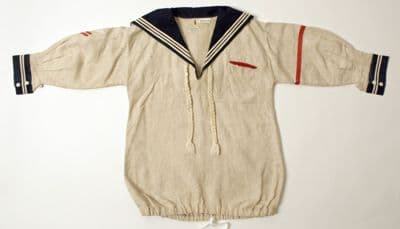
These two pieces trace the enduring grip of naval uniform on children's dress, from the Edwardian sailor blouse's practical linen construction with its signature square collar and contrast piping to the 1950s French dress that miniaturizes the same maritime codes into crisp white cotton with navy trim.
Text
Echoes Across Time
Edwardian → 1950s · 40yr56%
SHARED
These two pieces trace the enduring grip of naval uniform on children's dress, from the Edwardian sailor blouse's practical linen construction with its signature square collar and contrast piping to the 1950s French dress that miniaturizes the same maritime codes into crisp white cotton with navy trim.
Worn with·sailor hat
Edwardian → 1950s · 35yr50%
LINEAGE
Pull the Thread→
Follow this garment wherever the graph leads