V&A
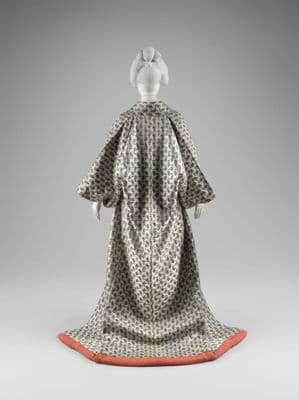
French Silk Brocade Uchikake Outer Kimono
Rococo · 1760s · Japanese
Production
artisan-craft
Material
silk brocade
Culture
Japanese
Influences
French Lyon silk trade · Edo period formal dress
This formal uchikake displays the characteristic T-shaped silhouette of Japanese kimono construction with extremely wide sleeves that extend beyond the body width. The garment is crafted from luxurious silk brocade featuring an all-over geometric pattern of small repeated motifs in silver against a dark ground. The fabric appears to be French Lyon silk, demonstrating the international textile trade of the 18th century. The kimono's most striking feature is the vibrant coral-red hem border that creates a dramatic contrast against the subdued metallic body. The sleeves are designed to trail on the ground, indicating this is a formal uchikake worn over other kimono layers for ceremonial occasions. The construction follows traditional Japanese flat-pattern cutting with straight seams and no fitted shaping.
coattentfloor length
Connected To
Worn with·accessories
SHARED210 years · cross-culture
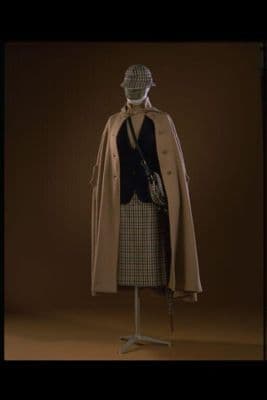
These two garments speak the same language of dramatic outerwear as armor, separated by centuries but united in their understanding of how volume creates presence. The 1970s British ensemble wraps its wearer in layers of wool and camel-toned cape like a modernist samurai, while the 18th-century uchikake achieves the same effect through silk brocade that pools and cascades with ceremonial weight.
Text
Echoes Across Time
1970s → Rococo · 210yr55%
SHARED
These two garments speak the same language of dramatic outerwear as armor, separated by centuries but united in their understanding of how volume creates presence. The 1970s British ensemble wraps its wearer in layers of wool and camel-toned cape like a modernist samurai, while the 18th-century uchikake achieves the same effect through silk brocade that pools and cascades with ceremonial weight.
Worn with·accessories
2010s → Rococo · 250yr48%
Pull the Thread→
Follow this garment wherever the graph leads