V&A
Navy Blue Silk Satin Manchu Jiapao Robe
Neoclassical Transition · 1780s · Chinese
Production
handmade
Material
silk satin
Culture
Chinese
Influences
Manchu court dress traditions · Chinese floral symbolism
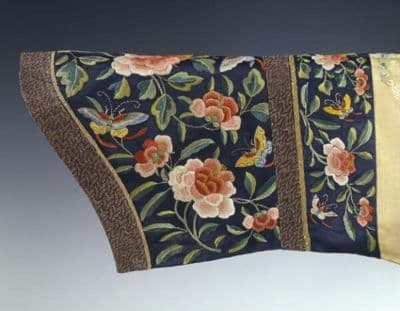
This Qing dynasty jiapao displays the characteristic construction of Manchu court dress with its flowing silhouette and horse-hoof cuffs. The navy blue silk satin ground is densely embroidered with naturalistic floral motifs including peonies, chrysanthemums, and flowing vine patterns in coral, pink, green, and gold silk threads. The embroidery technique shows fine satin stitching and seed stitching to create dimensional flower heads and delicate leaf work. The visible sleeve cuff demonstrates the traditional Manchu extended sleeve ending that would cover the hands when lowered. The garment's construction reflects the Qing dynasty's integration of Manchu dress codes with Chinese decorative traditions, particularly evident in the sophisticated floral symbolism and technical embroidery execution.
dressloose fitfloor length
Connected To
Technique·hand-embroideryFunction·court-formal
LINEAGEcross-culture→ directed
Lineage: “Chinese floral symbolism”
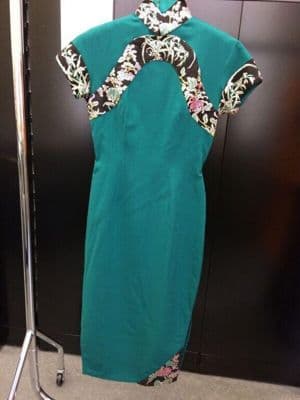
Both garments speak the same floral language, but across a century of upheaval. The 18th-century Manchu court robe establishes the vocabulary—those sinuous peonies and leaves embroidered in silk satin, the way ornament flows around the body's architecture—that the 1950s Hong Kong qipao translates into modern vernacular.
Pull the Thread→
Follow this garment wherever the graph leads