V&A
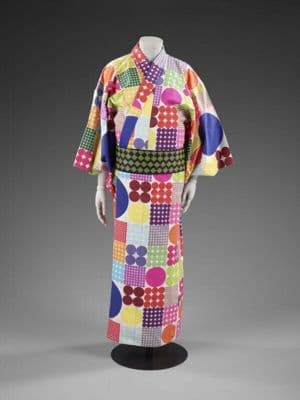
Multicolored Spotted Cotton Twill Men's Kimono
2020s · 2010s · Japanese
Designer
Robe Japonica
Production
artisan-craft
Material
cotton twill
Culture
Japanese
Movement
Dopamine Dressing
Influences
traditional Japanese kimono construction · contemporary graphic design
A contemporary men's kimono constructed from cotton twill in traditional T-shaped silhouette with wide sleeves and ankle-length proportions. The fabric features an all-over geometric print of circular dots and squares in vibrant purple, pink, yellow, and blue arranged in a patchwork-style grid pattern. The garment maintains classic kimono construction with overlapping front panels, wide obi sash at waist, and kimono collar. This piece represents modern Japanese design sensibility applying traditional garment structure to contemporary printed textiles, bridging heritage craft with current graphic design aesthetics.
dressloose fitfloor length
Connected To
68%
Influences·traditional Japanese kimono constructionWorn with·obi
SHARED110 years
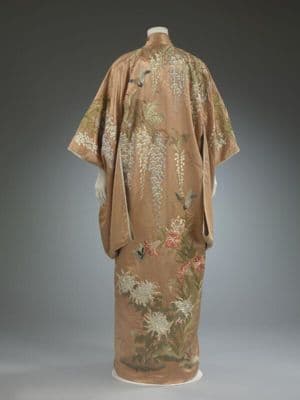
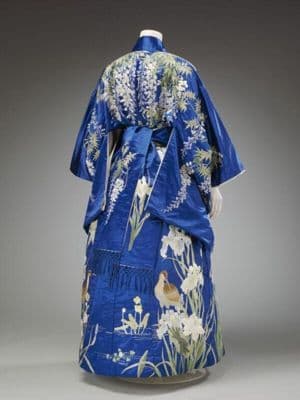
The century between these two kimonos tells the story of Japan's relationship with its own traditions—one reverent, one rebellious. The Edwardian piece speaks in silk's formal language, its cobalt ground dense with embroidered cranes and water plants that cascade down the back like a painted scroll, every motif positioned with classical precision.
Pull the Thread→
Follow this garment wherever the graph leads