2020s · 2020s · South African
Production
ready-to-wear
Material
nylon jersey
Culture
South African
Movement
Dopamine Dressing
Influences
camouflage pattern reinterpretation
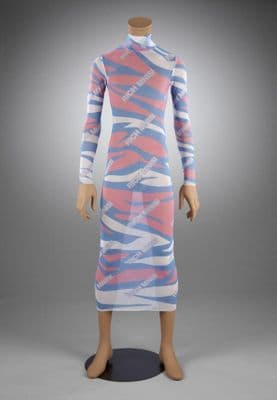
A form-fitting midi dress constructed from stretch nylon jersey featuring an abstract camouflage-inspired print in soft pastels. The garment has a high mock turtleneck, long fitted sleeves, and a body-skimming silhouette that extends to mid-calf length. The print combines organic, cloud-like shapes in coral pink, periwinkle blue, white, and lavender tones that flow seamlessly across the entire garment. The stretch fabric construction allows for close adherence to the body while maintaining comfort and movement. This piece exemplifies contemporary dopamine dressing principles through its optimistic color palette and mood-boosting aesthetic, representing a modern interpretation of camouflage patterns transformed into uplifting, non-military colorways.
Follow this garment wherever the graph leads
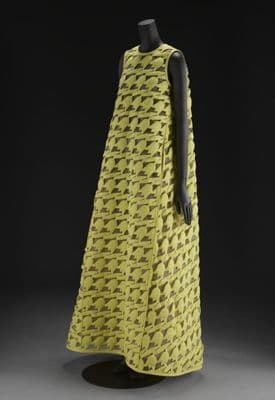
These two dresses capture dopamine dressing's global reach through radically different visual languages—the chartreuse piece wielding sharp, interlocking black geometrics like a Memphis Group fever dream, while the coral number flows with soft, cloud-like abstractions that seem to shift and breathe across the body.
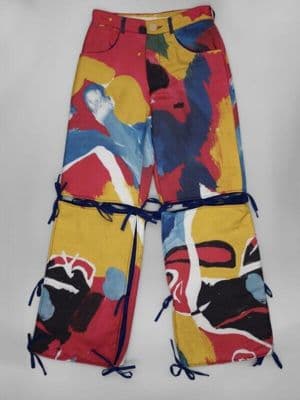
These two pieces capture dopamine dressing at its most confident, where bold abstract prints become wearable art therapy. The silk trousers' painterly splashes of red, yellow, and blue echo the bodycon dress's coral-and-lavender camouflage, both employing digital printing to achieve that saturated, almost hallucinogenic color saturation that screams optimism over subtlety.
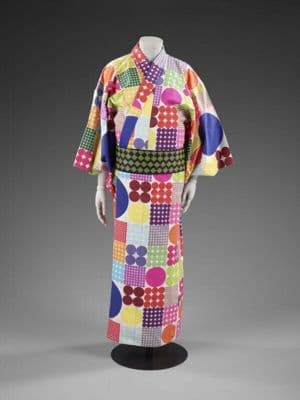
Both garments pulse with the same dopamine-driven energy that emerged as fashion's antidote to pandemic gloom, but they take radically different paths to get there. The South African dress uses swirling coral and blue camouflage to create movement across the body's curves, while the Japanese kimono arranges its riot of polka dots, stripes, and geometric patches in the structured grid that kimono construction demands.
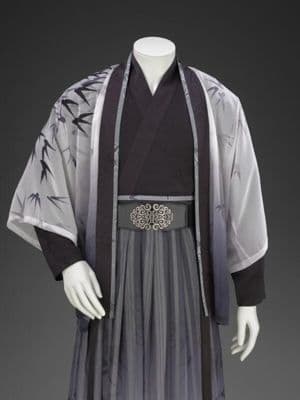
These two pieces reveal how digital printing has become fashion's universal language for mood enhancement, whether through the bodycon dress's candy-colored camouflage swirls or the kimono's delicate bamboo motifs floating across gossamer chiffon. The South African designer uses stretch jersey as a second skin for those coral and lavender abstractions, while the Chinese ensemble lets its botanical pattern breathe through flowing sleeves and an open silhouette.