V&A
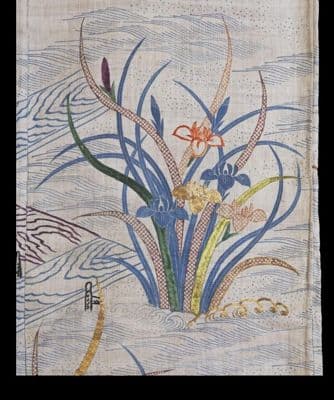
Cream Ramie Summer Kimono with Floral Embroidery
Romantic · 1820s · Japanese
Production
artisan-craft
Material
ramie
Culture
Japanese
Influences
Edo period yūzen dyeing · classical Japanese iris motifs
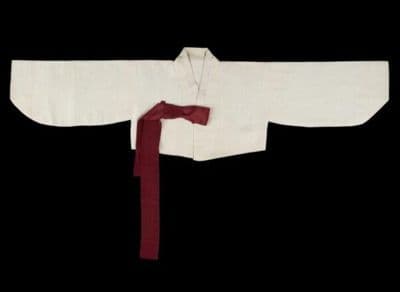
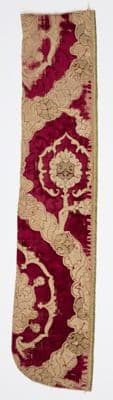
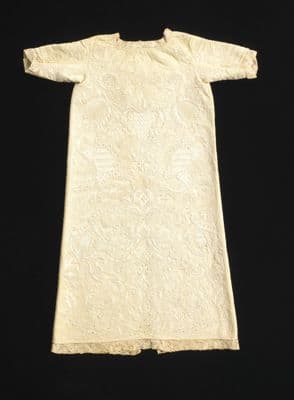
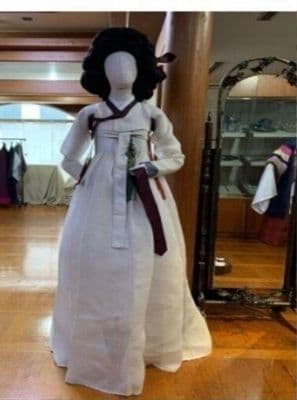
This summer kimono features a sophisticated textile design on plain weave ramie, a lightweight fiber ideal for hot weather. The composition centers on stylized iris flowers rendered in blue and orange with gold accents, emerging from flowing water patterns indicated by curved linear motifs. The design employs multiple techniques: freehand paste-resist dyeing creates the precise floral forms, while stencil work mimics tie-dyeing effects in the background. Silk and gold-wrapped thread embroidery adds dimensional detail to flower centers and leaf edges. The asymmetrical placement of motifs across the garment surface follows traditional Japanese aesthetic principles, with the design flowing from lower hem upward in a naturalistic arrangement typical of Edo period textile arts.
dressloose fitfloor length
Connected To
Worn with·obiWorn with·undergarmentsFunction·religious-ceremonial
SHARED190 years
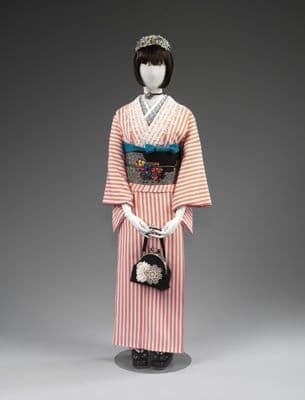
The pink striped kimono's crisp geometric lines and the cream ramie's loose botanical embroidery represent two poles of Japanese textile sensibility—one urban and structured, the other rustic and flowing—yet both achieve elegance through restraint.
Pull the Thread→
Follow this garment wherever the graph leads