SMITHSONIAN
Cream Silk Satin Child's Formal Dress
Baroque · 1700s · English
Production
handmade
Material
silk satin
Culture
English
Influences
adult women's formal gowns · court dress traditions
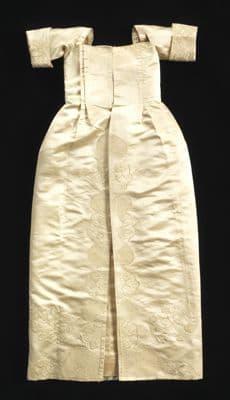
This child's formal dress displays characteristic late 17th-century construction with a fitted bodice featuring a square neckline and short puffed sleeves. The cream silk satin shows subtle aging and wrinkles that reveal the fabric's weight and drape. The bodice appears to have front closure with what looks like button or hook fastenings down the center front. The skirt extends in a full, floor-length silhouette typical of adult women's fashion scaled down for a child. The sleeves are cut short and gathered at the shoulder, creating small puffs. The overall construction demonstrates formal tailoring techniques adapted for children's wear, reflecting the period practice of dressing children as miniature adults for ceremonial occasions.
dressa-linesquare necklinefloor length
Connected To
Worn with·chemiseWorn with·staysWorn with·stockings
SHARED60 years · cross-culture
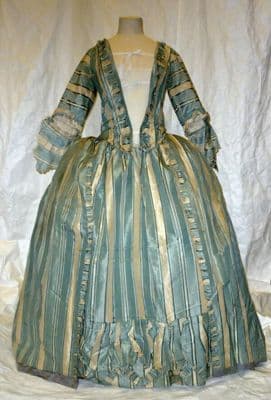
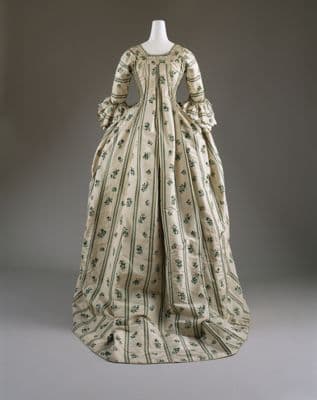
These two dresses speak the same language of constructed femininity across a sixty-year span, both built on the architectural foundation of stays that create their distinctive silhouettes. The earlier cream satin child's dress already shows the Baroque obsession with transforming the body into a geometric ideal—that rigid, conical torso and perfectly smooth front panel that erases any hint of natural form.
Echoes Across Time
Rococo → Baroque · 60yr64%
SHARED
These two dresses speak the same language of constructed femininity across a sixty-year span, both built on the architectural foundation of stays that create their distinctive silhouettes. The earlier cream satin child's dress already shows the Baroque obsession with transforming the body into a geometric ideal—that rigid, conical torso and perfectly smooth front panel that erases any hint of natural form.
Worn with·chemiseWorn with·staysWorn with·stockings
Pull the Thread→
Follow this garment wherever the graph leads