THE MET
Pale Green Silk Brocade Sack-Back Gown
Rococo · 1760s · British
Production
handmade
Material
silk brocade
Culture
British
Influences
French court fashion · Watteau pleating technique
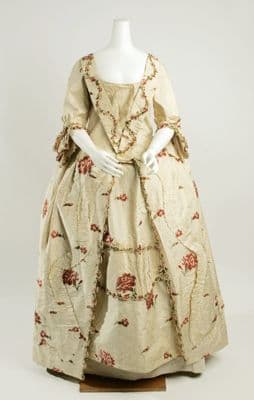
This mid-18th century sack-back gown features the characteristic Watteau pleats flowing from the neckline to the floor in an unbroken line. The bodice is fitted through the torso with a square neckline and elbow-length sleeves finished with ruffled engageantes. The silk fabric displays a delicate floral brocade pattern with scattered roses and botanical motifs in soft pink and burgundy on a pale green ground. The skirt extends over side panniers, creating the wide silhouette typical of Rococo fashion. Decorative ribbon trim edges the bodice and sleeve ruffles. The gown's construction demonstrates the period's emphasis on graceful movement and the display of luxurious textiles.
dressfit and flaresquare necklinefloor length
Connected To
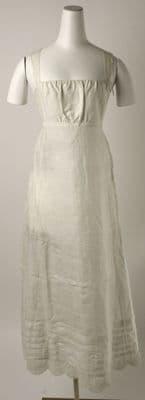
Influences·French court fashionWorn with·chemiseFunction·court-formal
SHARED60 years
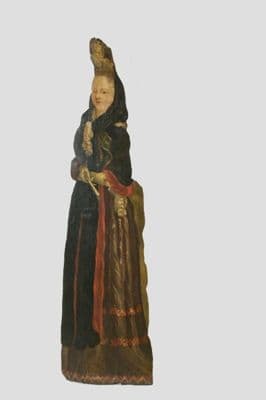
The pale green sack-back gown's languid drape and scattered rose motifs speak the same French court language as the earlier dark green silk, but with the relaxed confidence that comes from sixty years of evolution. Where the Baroque gown grips the torso in rigid formality—notice how that towering fontange headdress demands perfect posture—the later Rococo piece lets fabric flow from the shoulders in those signature Watteau pleats, turning structure into poetry.
Echoes Across Time
Rococo → Baroque · 60yr65%
SHARED
The pale green sack-back gown's languid drape and scattered rose motifs speak the same French court language as the earlier dark green silk, but with the relaxed confidence that comes from sixty years of evolution. Where the Baroque gown grips the torso in rigid formality—notice how that towering fontange headdress demands perfect posture—the later Rococo piece lets fabric flow from the shoulders in those signature Watteau pleats, turning structure into poetry.
Influences·French court fashionWorn with·chemiseFunction·court-formal
Pull the Thread→
Follow this garment wherever the graph leads