V&A
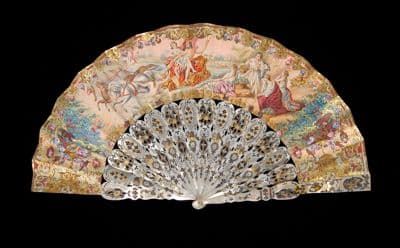
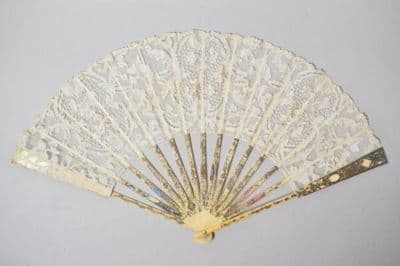
Ivory Alençon Lace Folding Fan
Neoclassical Transition · 1770s · French
Production
artisan-craft
Material
Alençon lace
Culture
French
Influences
French court fashion · rococo decorative arts
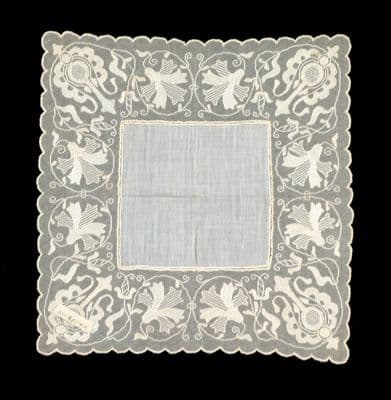
An exquisite French fan featuring delicate Alençon needlepoint lace stretched across carved ivory or bone sticks. The fan displays intricate floral and scrollwork motifs worked in fine white thread, creating an openwork pattern typical of this prestigious French lace technique. The guard sticks appear to be decorated with gilt or painted details, and the fan maintains the classical proportions favored during the late 18th century. The lace work demonstrates the sophisticated needle lace construction that made Alençon famous, with raised cordonnets outlining the design elements and fine mesh backgrounds filling the spaces between motifs.
hat
Connected To
Influences·French court fashionFunction·court-formal
SHARED10 years · cross-culture · cross-category
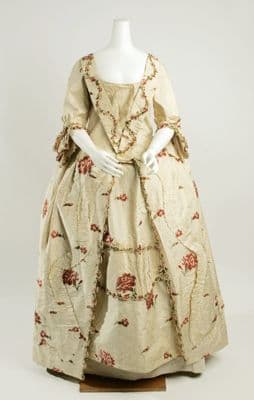
The sack-back gown's scattered rose sprigs and the fan's delicate botanical lacework speak the same visual language of 18th-century French refinement, where nature was domesticated into pretty patterns for polite society. Both pieces deploy ivory and pale green in that particularly aristocratic way—colors that whisper wealth rather than shout it, requiring the kind of careful maintenance that only the leisured class could afford.
Text62%
Image75%
Entity32%
Influences·French court fashionFunction·court-formal
SHARED50 years · cross-culture · cross-category
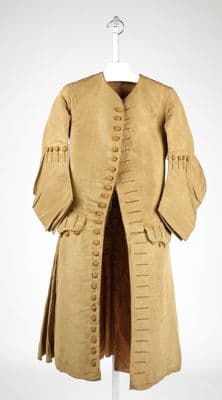
That golden justaucorps, with its meticulous parade of silk-covered buttons marching down the front and cuffs, speaks the same formal language as the ivory fan's delicate Alençon lace—both are artifacts of a world where every surface was an opportunity for ornamental virtuosity. The coat's structured silhouette and the fan's radiating pleats both understand ceremony as performance, where the wearer's status was literally worn on their sleeve (or fluttered from their fingertips).
Influences·French court fashionFunction·court-formal
SHAREDsame era · cross-culture · cross-category
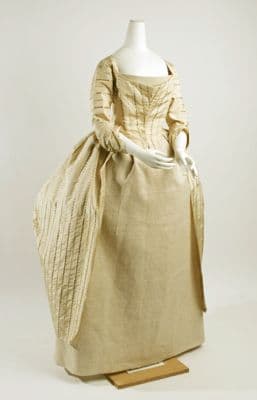
This pale yellow polonaise and ivory Alençon fan are twin expressions of the same aristocratic restraint that swept through late 18th-century European courts, where ostentatious Rococo excess was giving way to neoclassical refinement. Both pieces speak the new language of elegant simplicity—the dress with its clean lines and subtle self-trim replacing heavy brocades, the fan trading baroque flourishes for delicate geometric lace patterns that let the ivory silk breathe.
Technique·laceworkMotif·scroll-spiral
SHARED110 years · cross-culture · cross-category
Text61%
Pull the Thread→
Follow this garment wherever the graph leads