THE MET
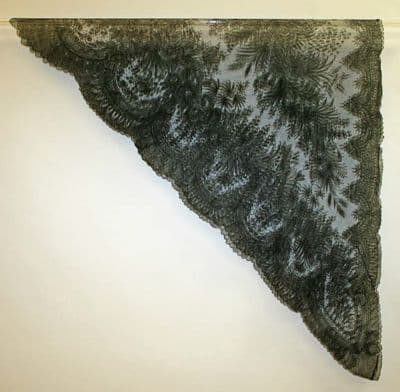
Black Cotton Lace Triangular Stole
Victorian Late / Bustle · 1870s · Belgian
Production
handmade
Material
cotton lace
Culture
Belgian
Influences
Brussels lace tradition
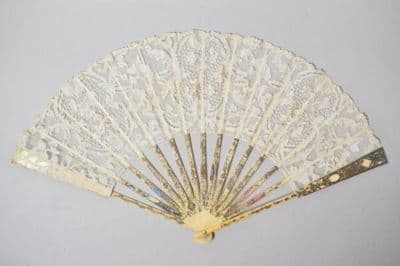
A triangular black lace stole displaying intricate Belgian lace construction with dense floral and foliate motifs. The piece features elaborate scalloped edges and demonstrates the characteristic fine needlework of 19th-century Belgian lace-making. The design incorporates flowing botanical patterns with roses, leaves, and scrolling vines worked in fine cotton thread. The triangular shape suggests it was designed to drape over the shoulders as an evening wrap. The density and complexity of the lacework indicates high-quality craftsmanship typical of Belgian lace centers like Brussels or Bruges during the Victorian period, when such accessories were essential for formal dress.
scarf
Connected To
Worn with·evening gownTechnique·hand-embroideryTechnique·lacework
SHAREDsame era · cross-culture · cross-category
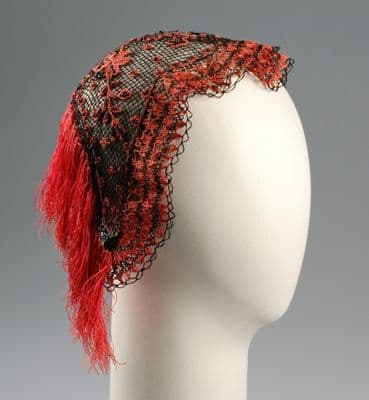
These two pieces reveal how Victorian women deployed the same delicate arsenal—gossamer nets, intricate lacework, meticulous hand-embroidery—across completely different social theaters. The Belgian lace stole, with its cascading botanical motifs and scalloped edges, was designed to drape dramatically over evening gowns, while the American silk net cap hugs the skull with its geometric red embroidery and jaunty tassel, meant for more intimate domestic evenings.
Text72%
Image67%
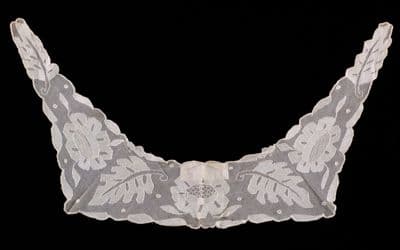
Technique·hand-embroideryTechnique·laceworkMotif·scroll-spiral
SHARED30 years · cross-culture
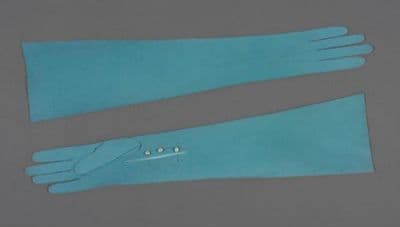
Worn with·evening gownFunction·formal-evening
SHARED100 years · cross-culture
Text48%
Worn with·evening gownFunction·formal-evening
SHARED80 years · cross-culture
Text46%
Pull the Thread→
Follow this garment wherever the graph leads