THE MET
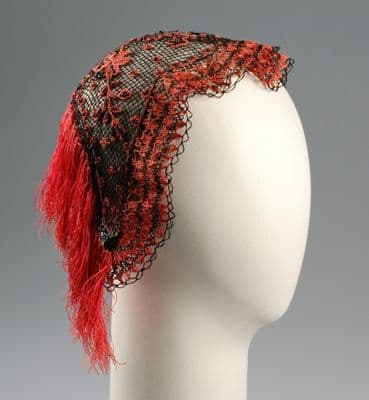
Black Silk Net Evening Cap with Red Embroidery
Victorian Late / Bustle · 1870s · American
Production
handmade
Material
silk net
Culture
American
Influences
European court millinery traditions
A delicate evening cap constructed from fine black silk net with red silk thread embroidery or trim creating decorative patterns throughout the mesh structure. The cap features a fitted crown that would sit close to the head, with the net fabric extending to cover the hair in a soft, draped manner. A prominent red silk tassel hangs from one side, adding movement and visual interest. The net construction allows for breathability while maintaining the formal appearance expected of Victorian evening wear. The geometric patterning created by the net weave combined with the red accent work demonstrates the period's preference for intricate handwork and attention to detail in even the smallest accessories.
headband/head covering/hair accessory
Connected To
65%
Worn with·jewelryTechnique·hand-embroideryFunction·court-formal
SHARED90 years · cross-culture
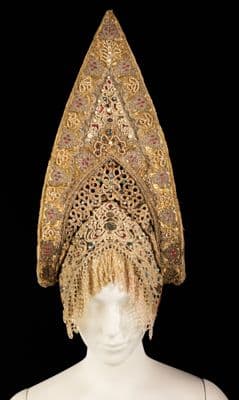
These two pieces reveal how lace became the great democratizer of feminine ceremony across cultures and classes. The Russian kokoshnik's golden threads form the same intricate web patterns as the American evening cap's black silk net—both using openwork to create drama through negative space rather than solid mass.
Text60%
Image73%
Worn with·evening gownTechnique·hand-embroideryTechnique·lacework
SHAREDsame era · cross-culture · cross-category
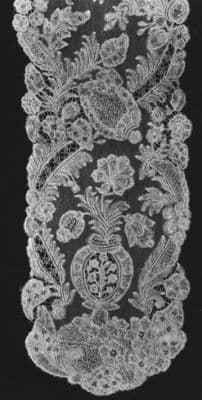
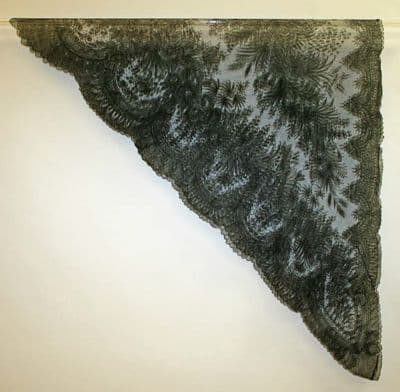
These two pieces reveal how Victorian women deployed the same delicate arsenal—gossamer nets, intricate lacework, meticulous hand-embroidery—across completely different social theaters. The Belgian lace stole, with its cascading botanical motifs and scalloped edges, was designed to drape dramatically over evening gowns, while the American silk net cap hugs the skull with its geometric red embroidery and jaunty tassel, meant for more intimate domestic evenings.
Worn with·evening gownFunction·court-formal
SHARED20 years · cross-culture · cross-category
Text71%
Worn with·evening gownFunction·court-formal
SHARED40 years · cross-culture · cross-category
Text48%
Echoes Across Time
Neoclassical Transition → Victorian Late / Bustle · 90yr65%
SHARED
These two pieces reveal how lace became the great democratizer of feminine ceremony across cultures and classes. The Russian kokoshnik's golden threads form the same intricate web patterns as the American evening cap's black silk net—both using openwork to create drama through negative space rather than solid mass.
Worn with·jewelryTechnique·hand-embroideryFunction·court-formal
Pull the Thread→
Follow this garment wherever the graph leads