Rococo · 1720s · British
Production
handmade
Material
silk
Culture
British
Influences
French court fashion · justaucorps tradition
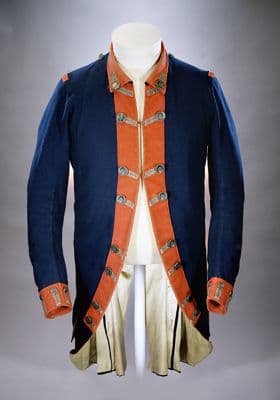
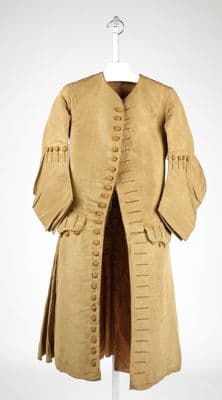
This 1720s justaucorps demonstrates the formal masculine silhouette of the Rococo period. The coat features a fitted bodice that extends into knee-length skirts, creating the characteristic A-line shape. Two parallel rows of closely-spaced buttons run down the center front, with functional buttonholes visible. The sleeves show the period's distinctive wide cuffs that flare dramatically from the forearm, likely stiffened to maintain their shape. The coat opens to reveal a contrasting brown lining or waistcoat beneath. The golden tan silk appears to have a smooth, possibly taffeta weave that would have provided the structure necessary for this formal silhouette. Side vents at the coat's hem would have allowed for movement while maintaining the garment's tailored appearance.
That cascade of silk-covered buttons marching down both coats tells the story of how 18th-century men's fashion moved from court to battlefield without losing its theatrical flair.
Follow this garment wherever the graph leads
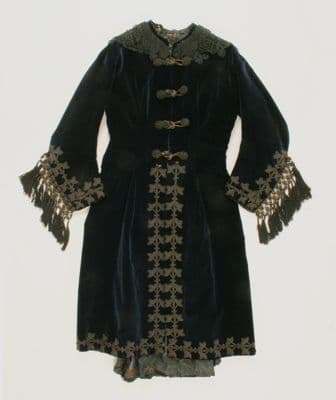
These two coats speak the same aristocratic language across the Atlantic, both channeling Louis XIV's Versailles through their obsessive button parades and theatrical sleeve drama. The American velvet robe pushes deeper into Rococo excess with its forest-green luxury and gold braided flourishes, while the British justaucorps maintains a more restrained golden elegance—yet both demand the same ritualistic daily performance of having a valet fasten dozens of buttons from throat to hem.
These two garments reveal how French court fashion colonized European aristocracy through sheer fabric authority.
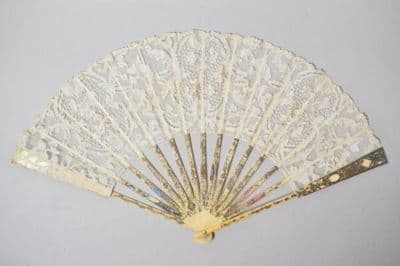
That golden justaucorps, with its meticulous parade of silk-covered buttons marching down the front and cuffs, speaks the same formal language as the ivory fan's delicate Alençon lace—both are artifacts of a world where every surface was an opportunity for ornamental virtuosity. The coat's structured silhouette and the fan's radiating pleats both understand ceremony as performance, where the wearer's status was literally worn on their sleeve (or fluttered from their fingertips).

That golden justaucorps, with its meticulous parade of silk-covered buttons marching down the front and cuffs, speaks the same formal language as the ivory fan's delicate Alençon lace—both are artifacts of a world where every surface was an opportunity for ornamental virtuosity. The coat's structured silhouette and the fan's radiating pleats both understand ceremony as performance, where the wearer's status was literally worn on their sleeve (or fluttered from their fingertips).