V&A
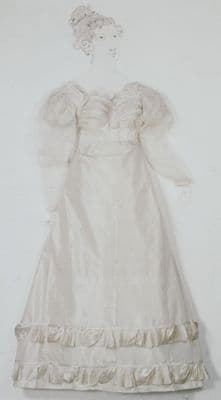
White Silk Empire Waist Wedding Dress with Satin Trim
Romantic · 1820s · English
Production
handmade
Material
silk taffeta
Culture
English
Influences
neoclassical columnar silhouette · French Empire court fashion
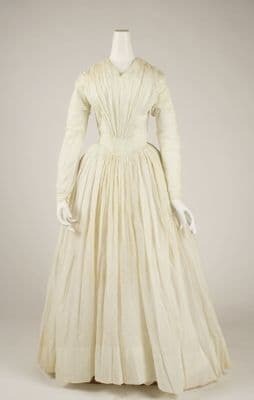
This empire waist wedding gown features a fitted bodice with a dramatically high waistline positioned just below the bust, characteristic of the Regency period's neoclassical influence. The short, puffed sleeves are constructed from delicate silk net, creating a translucent overlay effect. The bodice appears to have a square or slightly rounded neckline with decorative trim. The skirt falls in a straight, columnar silhouette from the high waist to the floor, with multiple tiers of ruffled trim at the hem creating horizontal emphasis. The silk appears to be a substantial taffeta or similar crisp weave that maintains the gown's structured shape while allowing graceful movement.
dressa-lineoff-the-shoulderfloor length
Connected To
57%
Worn with·chemiseWorn with·corsetWorn with·petticoat
SHARED80 years · cross-culture
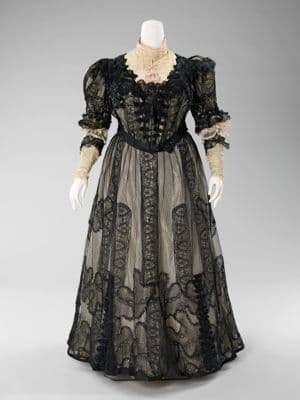
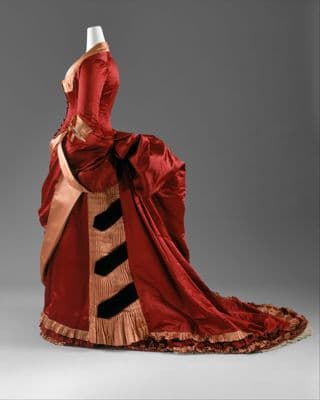
These two dresses reveal how the language of luxury whispers across centuries through the smallest gestures. The Belle Époque gown's golden lattice work and those telltale silk tassels dangling from the sleeves echo in the Empire dress's satin ribbon trim that cascades down the skirt in gentle bands—both designers understood that true opulence lies not in obvious display but in the meticulous accumulation of precious details.
Echoes Across Time
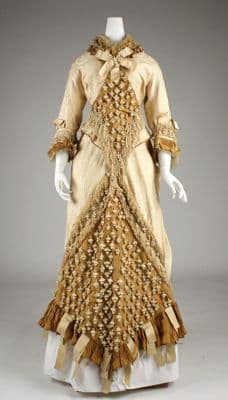
Belle Epoque → Romantic · 80yr57%
SHARED
These two dresses reveal how the language of luxury whispers across centuries through the smallest gestures. The Belle Époque gown's golden lattice work and those telltale silk tassels dangling from the sleeves echo in the Empire dress's satin ribbon trim that cascades down the skirt in gentle bands—both designers understood that true opulence lies not in obvious display but in the meticulous accumulation of precious details.
Worn with·chemiseWorn with·corsetWorn with·petticoat
Pull the Thread→
Follow this garment wherever the graph leads