THE MET
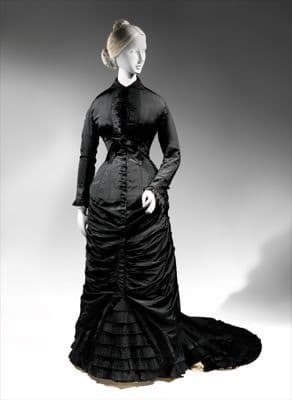
Black Silk Taffeta Bustle Afternoon Dress
Victorian Late / Bustle · 1870s-1880s · American
Production
handmade
Material
silk taffeta
Culture
American
Influences
military frogging details · Second Empire silhouette
This black silk taffeta afternoon dress exemplifies 1870s bustle silhouette with its tightly fitted bodice and dramatically draped skirt extending into a long train. The high neckline features military-inspired frogging or decorative button closure down the center front. Long fitted sleeves with narrow cuffs emphasize the corseted torso. The skirt displays characteristic bustle construction with fabric gathered and draped over the rear support structure, creating cascading folds that pool into an extended train. The lustrous taffeta fabric holds the structured silhouette while providing formal weight appropriate for afternoon social calls during the height of Victorian fashion.
dresstrumpethigh neckfloor length
Connected To
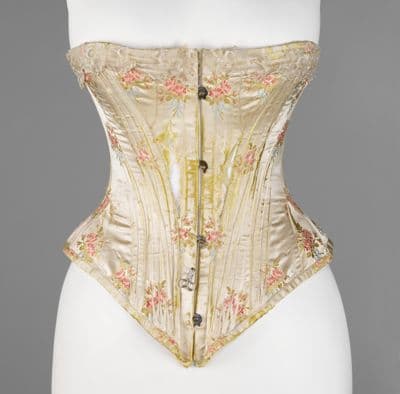
Worn with·bustle padWorn with·chemiseWorn with·petticoat
SHARED10 years · cross-culture · cross-category
Echoes Across Time
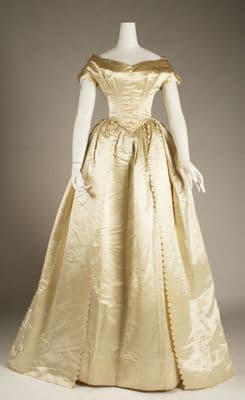
Victorian Late / Bustle → Romantic · 50yr62%
SHARED
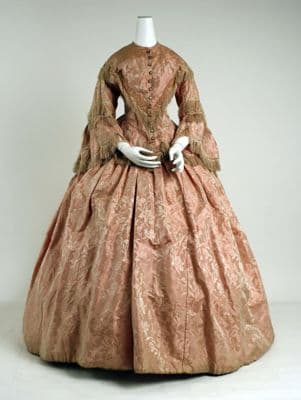
The black bustle dress and pale gold wedding gown are separated by fifty years of American corsetry, yet both demand the same architectural understructure—chemise, corset, petticoat—to achieve their dramatically different silhouettes. Where the earlier gold gown spreads into a perfect bell through yards of silk satin, the later black taffeta pulls all that volume backward into the bustle's concentrated drama, its trained skirt cascading like a waterfall from the small of the back.
Worn with·chemiseWorn with·corsetWorn with·petticoat
Pull the Thread→
Follow this garment wherever the graph leads