Victorian Late / Bustle · 1870s · French
Production
handmade
Material
silk brocade
Culture
French
Influences
French corsetry tradition
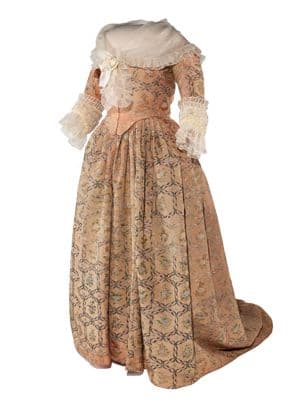
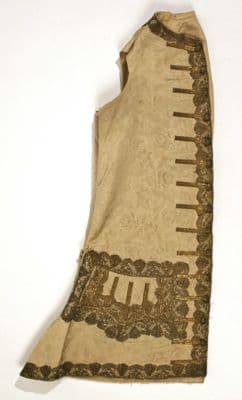
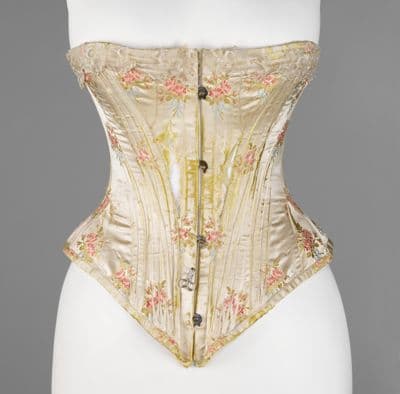
This French corset from circa 1876 exemplifies Victorian undergarment construction with its characteristic long-line silhouette extending well below the natural waist. The pale gold silk brocade features delicate floral motifs in pink and green scattered across the surface. Multiple vertical boning channels create the rigid structure necessary for extreme waist compression, while the front busk closure with metal hardware allows for adjustment. The pointed waistline and flared hip section reflect the transitional period between crinoline and bustle eras. Hand-finished seaming and careful pattern matching demonstrate high-quality construction typical of French corsetry.


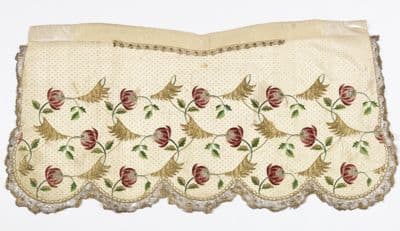
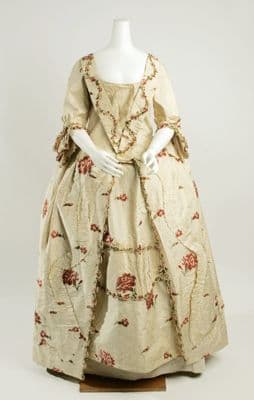
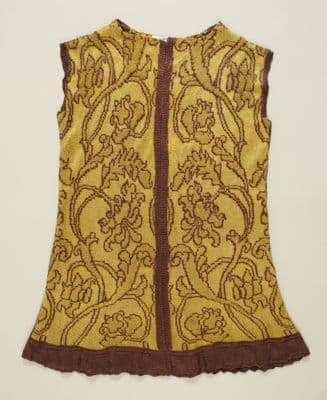
This Victorian corset and Baroque apron reveal how French silk weavers perfected a visual vocabulary that endured across centuries — both bloom with delicate rose motifs scattered across cream silk brocade, the earlier apron's burgundy buds echoing in the corset's pink florals.

Follow this garment wherever the graph leads
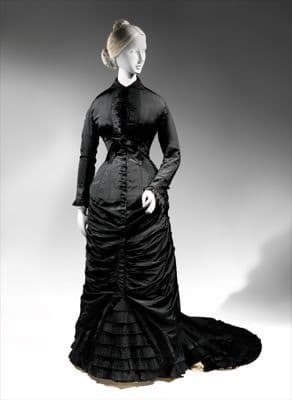
The black taffeta dress and the pale gold corset are intimate collaborators in Victorian body architecture, one the public performance, the other the private engineering. That corset's rigid boning and front-lacing system would have created the impossible wasp waist that makes the dress's fitted bodice and cascading bustle drapery possible—the corset literally sculpting the torso into the S-curve that the dress's silhouette demands.
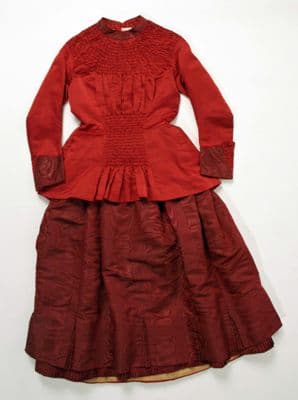
These pieces reveal the Victorian obsession with architectural control over the female form, but through opposite means. The burgundy dress builds its drama outward with smocked gathering at the bodice and cascading tiers that would have billowed over a bustle frame, while the pale gold corset works inward, its floral brocade disguising the rigid boning that carved the torso into the era's coveted hourglass.
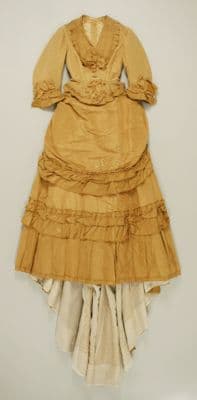
These pieces reveal the Victorian obsession with architectural dressing from the inside out. The corset's boned structure and precise waist-cinching creates the foundation for the dress's dramatic silhouette—that cascade of ruffles and gathering at the bustle wouldn't read as intended without the corset's rigid scaffolding underneath.
This Victorian corset and Baroque apron reveal how French silk weavers perfected a visual vocabulary that endured across centuries — both bloom with delicate rose motifs scattered across cream silk brocade, the earlier apron's burgundy buds echoing in the corset's pink florals.