V&A
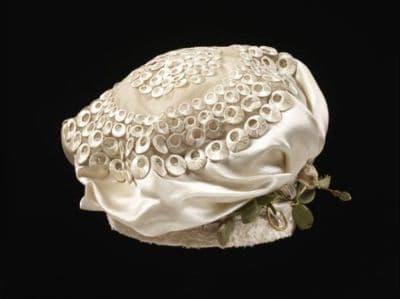
Ivory Silk Satin Turban Hat with Flowers
Empire / Regency · 1810s · British
Production
handmade
Material
silk satin
Culture
British
Movement
Orientalism
Influences
Ottoman turban styling · Eastern exotic fashion
This turban-style hat exemplifies Regency period headwear with its exotic Eastern influence. The ivory silk satin is wrapped and draped to create soft, rounded volumes that frame the head. Decorative cutwork or eyelet embroidery creates geometric circular patterns across the surface, adding textural interest to the lustrous fabric. The construction involves careful pleating and gathering to achieve the characteristic turban silhouette, with fabric ends tucked and secured. Small artificial flowers or fabric rosettes accent the design. This style reflects the Regency fascination with Orientalism and the practical need for fashionable head covering during the era's emphasis on classical simplicity.
hat
Connected To
Movement·OrientalismTechnique·draping
SHARED100 years · cross-culture · cross-category
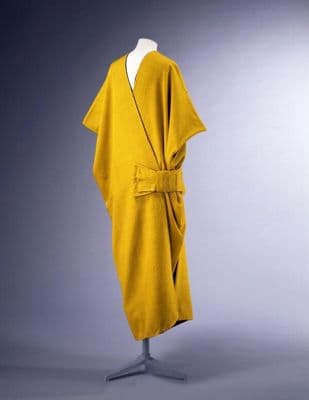
Both pieces reveal how European fashion consumed and reimagined "the Orient" through pure draping—the turban's ivory satin pooling into soft folds punctuated by those scattered floral appliqués, the yellow mantle's kimono-like sleeves and wrap construction that transforms the wearer into a living sculpture.
Text46%
Image68%
Entity30%
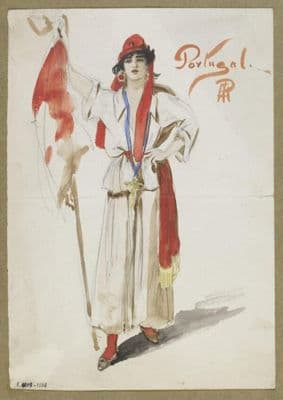
Movement·OrientalismTechnique·draping
SHARED110 years · cross-category
Both pieces ride the same wave of Western fascination with "exotic" Eastern dress, but separated by a century of changing theatrical codes. The Regency turban transforms Ottoman headwear into delicate English propriety—all ivory silk roses and demure draping that whispers rather than announces its foreign inspiration.
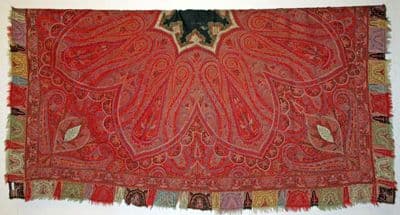
Movement·Orientalism
SHARED70 years · cross-culture · cross-category
The sinuous paisley motifs cascading across this Victorian shawl and the sculptural turban silhouette of the Regency hat are separated by seven decades but united by Europe's persistent fascination with "the Orient." Where the earlier turban borrows wholesale from Ottoman court dress—that silk satin twisted and draped to mimic a pasha's headwear—the later shawl represents the full domestication of Eastern exoticism, transforming Kashmir's ancient boteh pattern into parlor-ready luxury.
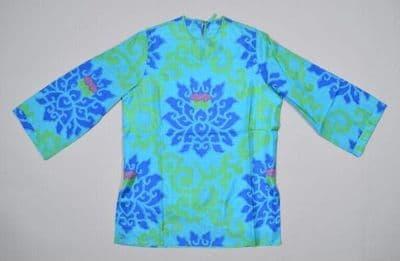
Movement·Orientalism
SHARED150 years · cross-culture · cross-category
Text49%
Image62%
Pull the Thread→
Follow this garment wherever the graph leads