Roaring Twenties / Art Deco · 1920s · British
Designer
Madame Handley-Seymour
Production
one-of-a-kind
Material
silk
Culture
British
Movement
Orientalism
Influences
Japanese kimono · Orientalist theater costume
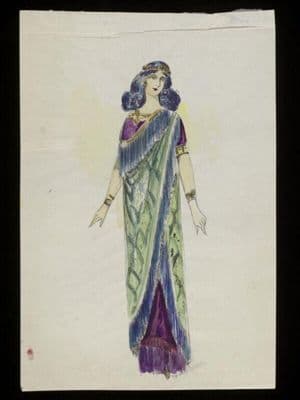
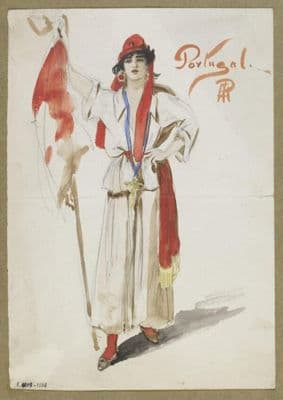
This costume design depicts a flowing theatrical garment with dramatic proportions characteristic of 1920s stage design. The figure wears a cream-colored silk robe or coat with wide, kimono-inspired sleeves that extend dramatically from the body. Red accents appear as trim along the edges and as a coordinating head covering or turban. The silhouette is deliberately oversized and sculptural, creating visual impact suitable for stage performance. Gold tassels or fringe details add movement and theatrical flair. The loose, unstructured fit allows for dramatic gesture and movement, while the exotic styling reflects the period's fascination with Orientalist themes in fashion and theater.


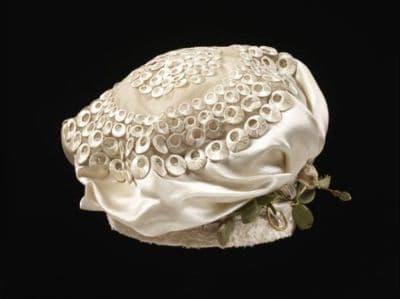
Both pieces ride the same wave of Western fascination with "exotic" Eastern dress, but separated by a century of changing theatrical codes. The Regency turban transforms Ottoman headwear into delicate English propriety—all ivory silk roses and demure draping that whispers rather than announces its foreign inspiration.


Follow this garment wherever the graph leads
Both sketches capture the 1920s theater world's hungry appropriation of "exotic" dress, but they reveal how differently European designers digested Eastern influence. The cream coat with its kimono sleeves and obi-like red sash shows how Japanese aesthetics were filtered through Western tailoring—structured, contained, made safe for the drawing room.
Both pieces ride the same wave of Western fascination with "exotic" Eastern dress, but separated by a century of changing theatrical codes. The Regency turban transforms Ottoman headwear into delicate English propriety—all ivory silk roses and demure draping that whispers rather than announces its foreign inspiration.
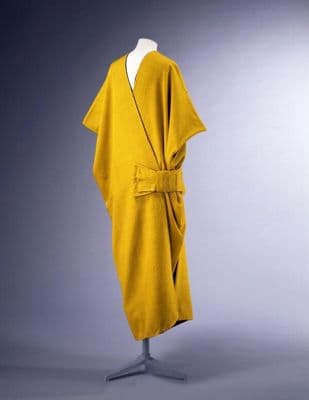
Both garments drink from the same well of early 20th-century Orientalist fantasy, but the yellow wool mantle's severe geometric wrap speaks Belle Époque restraint while the cream silk coat explodes into theatrical excess with its scarlet sash and dramatic sleeves.
Both garments ride the same wave of Western fashion's enduring romance with Eastern drapery, but they capture different moments in that long affair. The 1920s theatrical coat wraps its wearer in billowing silk that suggests both kimono sleeves and Middle Eastern robes, complete with that jaunty turban and the kind of orientalist fantasy that made Poiret famous.