Belle Epoque · 1910s · French
Designer
Paul Poiret
Production
haute couture
Material
wool lined with silk chiffon
Culture
French
Movement
Orientalism
Influences
Japanese kimono construction · Oriental wrapping techniques
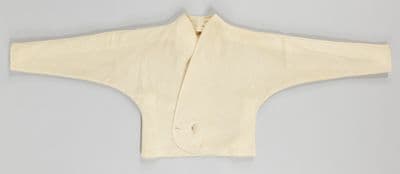
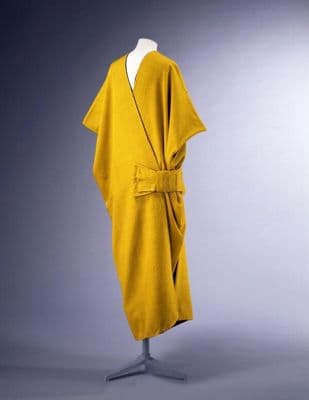
This golden yellow wool mantle demonstrates Paul Poiret's revolutionary approach to women's outerwear in the 1910s. The garment features a dramatic wrap construction with wide, kimono-inspired sleeves that create a cocoon-like silhouette. The coat wraps across the body and secures with a fabric belt at the waist, eliminating the need for structured closures. The wool appears to be a medium-weight fabric with a smooth finish, lined with silk chiffon for comfort and drape. The generous proportions and flowing lines reflect Poiret's rejection of corseted fashion in favor of liberated, Oriental-influenced forms that allowed natural body movement.
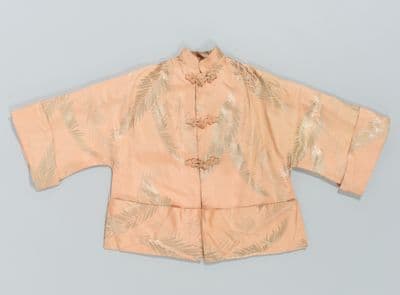
That cream linen jacket with its dramatically wide sleeves cut in one piece with the body is pure kimono logic translated into 1950s American sportswear—the kind of cross-cultural borrowing that happened when Western designers finally grasped that Japanese construction could solve the puzzle of elegant ease.

That cream linen jacket with its dramatically wide sleeves cut in one piece with the body is pure kimono logic translated into 1950s American sportswear—the kind of cross-cultural borrowing that happened when Western designers finally grasped that Japanese construction could solve the puzzle of elegant ease.


Follow this garment wherever the graph leads
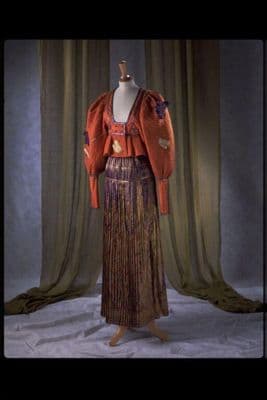
Both garments borrow the kimono's genius for transforming a rectangle of fabric into pure sculptural drama through strategic wrapping and draping. The 1970s British ensemble channels this through its boxy, straight-armed jacket that sits like armor over the pleated lamé skirt, while the Belle Époque French mantle achieves the same effect with its enveloping cocoon silhouette and that decisive wrap-and-tie closure.
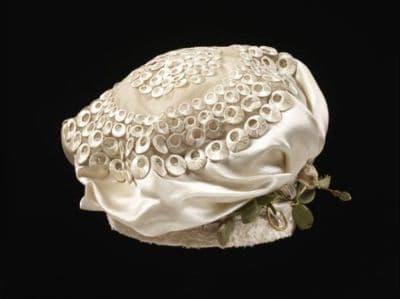
Both pieces reveal how European fashion consumed and reimagined "the Orient" through pure draping—the turban's ivory satin pooling into soft folds punctuated by those scattered floral appliqués, the yellow mantle's kimono-like sleeves and wrap construction that transforms the wearer into a living sculpture.
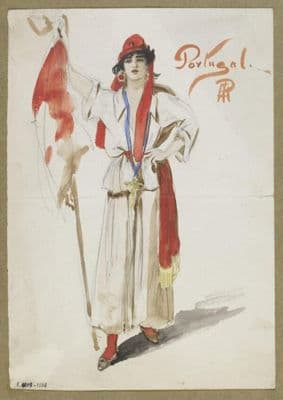
Both garments drink from the same well of early 20th-century Orientalist fantasy, but the yellow wool mantle's severe geometric wrap speaks Belle Époque restraint while the cream silk coat explodes into theatrical excess with its scarlet sash and dramatic sleeves.
Both garments borrow the kimono's genius for transforming a rectangle of fabric into pure sculptural drama through strategic wrapping and draping. The 1970s British ensemble channels this through its boxy, straight-armed jacket that sits like armor over the pleated lamé skirt, while the Belle Époque French mantle achieves the same effect with its enveloping cocoon silhouette and that decisive wrap-and-tie closure.