V&A
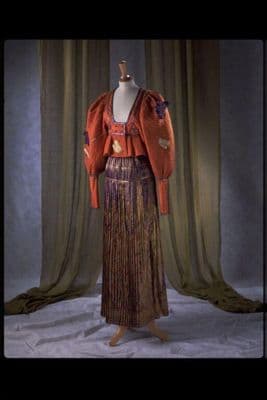
Coral Quilted Silk Jacket with Gold Lamé Skirt
1970s · 1970s · British
Designer
Bill Gibb
Production
haute couture
Material
quilted silk with metallic lamé
Culture
British
Movement
Ethnic Revival · Disco
Influences
Japanese kimono construction · 1970s ethnic revival
This evening ensemble features a coral-red quilted silk jacket with wide kimono-style sleeves and an open front construction that reveals a fitted bodice underneath. The jacket displays intricate hand-embroidered details in metallic threads creating geometric and possibly floral motifs across the surface. The accompanying skirt is constructed from bronze-gold lamé fabric with vertical pleating or gathering that creates a column-like silhouette extending to floor length. The ensemble exemplifies 1970s evening wear's embrace of exotic influences and rich textural contrasts, combining the structured quilting technique with the fluid drape of metallic fabric. The jacket's loose, robe-like construction over a fitted foundation reflects the era's layered approach to formal dressing.
dressa-linesquare necklinefloor length
Connected To
Influences·Japanese kimono construction
SHARED60 years · cross-culture · cross-category
Both garments borrow the kimono's genius for transforming a rectangle of fabric into pure sculptural drama through strategic wrapping and draping. The 1970s British ensemble channels this through its boxy, straight-armed jacket that sits like armor over the pleated lamé skirt, while the Belle Époque French mantle achieves the same effect with its enveloping cocoon silhouette and that decisive wrap-and-tie closure.
Echoes Across Time
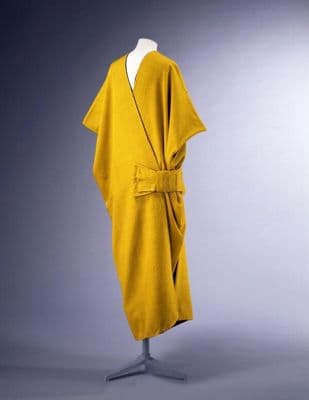
1970s → Belle Epoque · 60yr64%
SHARED
Both garments borrow the kimono's genius for transforming a rectangle of fabric into pure sculptural drama through strategic wrapping and draping. The 1970s British ensemble channels this through its boxy, straight-armed jacket that sits like armor over the pleated lamé skirt, while the Belle Époque French mantle achieves the same effect with its enveloping cocoon silhouette and that decisive wrap-and-tie closure.
Influences·Japanese kimono construction
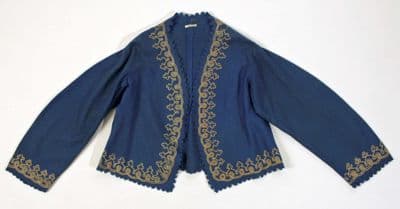
Victorian Late / Bustle → 1970s
Pull the Thread→
Follow this garment wherever the graph leads