SMITHSONIAN
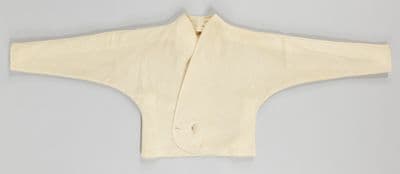
Cream Linen Dolman Sleeve Jacket with Yellow Pinstripes
1950s · 1950s · American
Production
ready-to-wear
Material
linen
Culture
American
Movement
New Look / Post-War
Influences
Japanese kimono construction · 1940s utility fashion
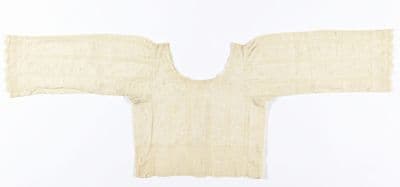
A cream-colored linen jacket featuring the distinctive dolman sleeve construction popular in 1950s fashion. The garment displays extremely wide, bat-wing sleeves that extend from the neckline to the wrist in one continuous piece, creating a dramatic horizontal silhouette when arms are extended. The jacket appears to have a simple front closure, likely with buttons, and shows the relaxed, unstructured fit characteristic of dolman designs. The pale yellow pinstripe mentioned in records is subtle against the cream base. This construction technique eliminates traditional armhole seams, instead cutting sleeves as extensions of the body panels, reflecting the era's experimentation with geometric forms and streamlined silhouettes that echoed contemporary architectural and design movements.
jacketloose fitcollarlessabove-the-hip
Connected To
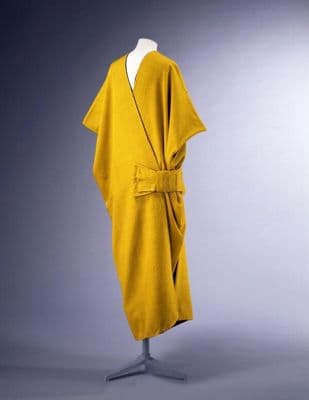
67%
Influences·Japanese kimono constructionTechnique·draping
SHARED40 years · cross-culture
That cream linen jacket with its dramatically wide sleeves cut in one piece with the body is pure kimono logic translated into 1950s American sportswear—the kind of cross-cultural borrowing that happened when Western designers finally grasped that Japanese construction could solve the puzzle of elegant ease.
Pull the Thread→
Follow this garment wherever the graph leads