THE MET
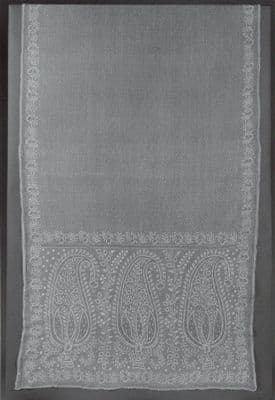
White Cotton Paisley Border Shawl
Empire / Regency · 1800s · European
Production
mass-produced
Material
cotton
Culture
European
Movement
Orientalism
Influences
Kashmir shawl tradition · Indian paisley motifs
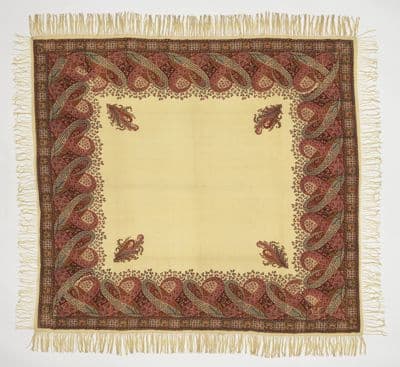
A rectangular cotton shawl featuring an intricate woven paisley border design along the bottom edge and decorative trim along the sides. The main field is plain white cotton, while the border displays three large paisley motifs rendered in white-on-white or cream tones through varied weaving techniques. The paisley forms are teardrop-shaped with internal scrollwork and detailed fill patterns characteristic of Kashmir shawl designs. Side borders feature geometric meandering patterns. The shawl demonstrates the European textile industry's attempt to replicate expensive Kashmir shawls using cotton rather than wool, making fashionable paisley designs accessible to middle-class consumers during the Empire period.
scarf
Connected To
Influences·Indian paisley motifsInfluences·Kashmir shawl traditionMovement·OrientalismTechnique·jacquard-weavingTechnique·machine-weavingMotif·paisley
SHARED60 years · cross-culture
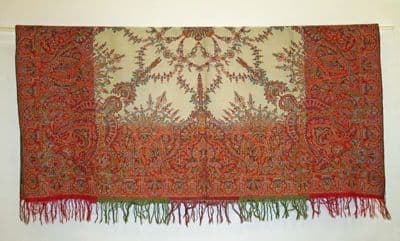
The teardrop paisley that winds along both shawls' borders carries the same genetic code, even as it traveled from the delicate white cotton of Regency drawing rooms to the richer wool and burgundy palette of mid-Victorian taste.
Influences·Indian paisley motifsInfluences·Kashmir shawl traditionMovement·OrientalismTechnique·
Influences·Kashmir shawl traditionTechnique·jacquard-weavingTechnique·machine-weavingMotif·paisley
Influences·Kashmir shawl traditionMotif·paisley
SHARED30 years · cross-culture
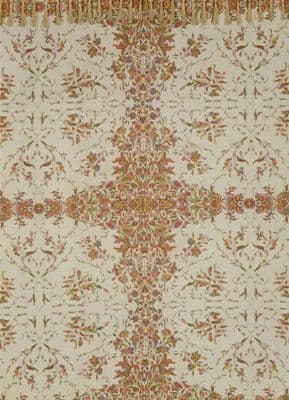
The paisley's journey from Kashmir to European drawing rooms plays out in these two shawls like a game of visual telephone. The earlier Indian wool example shows the motif in its full baroque glory—those burgundy paisleys sprawling across cream ground with the confident density of their birthplace, each teardrop shape packed with intricate detail that speaks to centuries of weaving mastery.
Pull the Thread→
Follow this garment wherever the graph leads