SMITHSONIAN
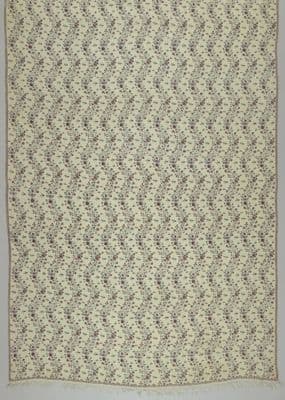
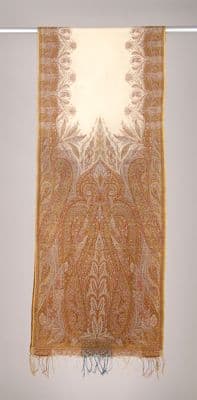
Cream Wool Paisley Shawl with Burgundy Sage Motifs
Romantic · 1830s · Indian
Production
handmade
Material
wool
Culture
Indian
Influences
Kashmir shawl tradition · boteh motif
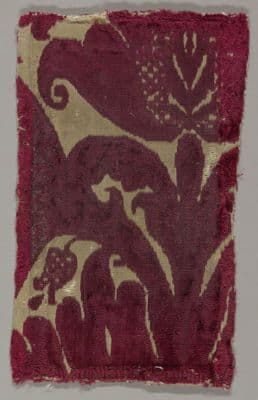
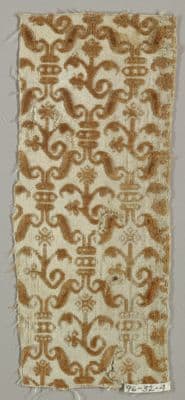
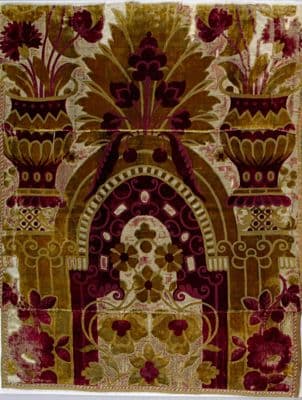
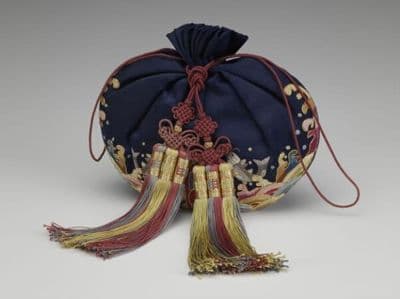
This Indian wool shawl displays the characteristic paisley motif arranged in diagonal rows across a cream ground. The paisley forms, known as boteh, are rendered in muted sage green with burgundy and gold accents, creating a sophisticated color palette typical of Kashmir shawl production. The motifs are densely packed, following traditional Indian textile patterns that were highly prized in European markets during the Romantic period. The wool appears finely woven, likely using the twill tapestry technique characteristic of authentic Kashmir shawls. The rectangular format and substantial size indicate this was designed as a formal wrap for evening wear, representing the height of luxury textile production from the Indian subcontinent during the 1830s.
scarf
Connected To
Influences·Kashmir shawl traditionTechnique·hand-weavingTechnique·tapestryFunction·formal-eveningMotif·paisley
SHARED30 years
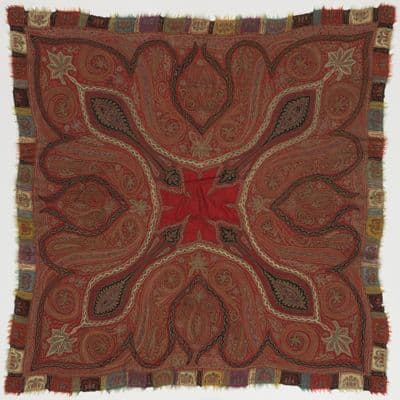
These two Kashmir shawls reveal how the paisley motif evolved from sacred geometry to romantic ornament across three decades of European fascination with Indian textiles. The earlier red shawl commands attention with its bold, architectural paisley that radiates from a central medallion like a mandala—each teardrop form dense with intricate detail and spiritual weight.
Text
Influences·Kashmir shawl traditionTechnique·hand-weavingMotif·paisley
SHARED20 years · cross-culture
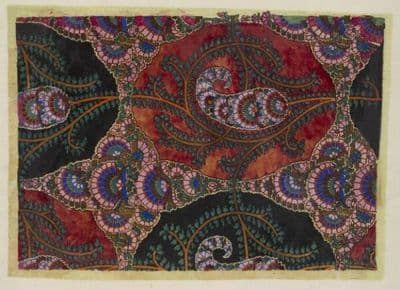
The Victorian shawl's explosive paisley riot—those swirling teardrops packed so densely they seem to pulse against the crimson ground—descends directly from the delicate, orderly paisleys scattered across the earlier Indian example like seeds on cream silk. Where the Indian weaver understood restraint, spacing each burgundy motif to breathe against the neutral field, the British mill cranked up the volume until the pattern became pure visual noise.
Influences·Kashmir shawl traditionFunction·formal-eveningMotif·paisley
SHARED80 years · cross-culture
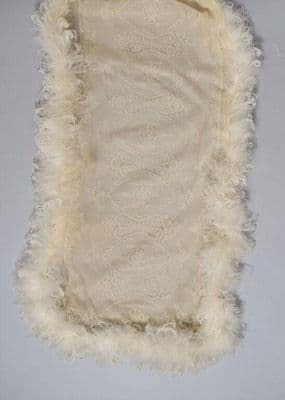
These two pieces trace the evolution of the paisley from its original Kashmir incarnation to its Belle Époque afterlife. The wool shawl displays the classic teardrop motifs in their full, dense glory—burgundy and sage paisleys marching across cream wool in the traditional Indian manner that made these shawls the ultimate status symbol of the Romantic era.
Influences·Kashmir shawl traditionTechnique·hand-weavingMotif·paisley
SHAREDsame era · cross-culture
These two shawls reveal how the Kashmir paisley became fashion's most promiscuous motif, traveling from Indian looms to Scottish mills with surprising fidelity. The first piece shows the teardrop paisley in its full baroque glory—those sinuous, flame-like forms climbing toward the center in rich amber and cream, while the second compresses the same DNA into an all-over scatter of tiny paisleys, like someone took the grand gesture and whispered it instead.
Echoes Across Time
Belle Epoque → Romantic · 80yr67%
SHARED
These two pieces trace the evolution of the paisley from its original Kashmir incarnation to its Belle Époque afterlife. The wool shawl displays the classic teardrop motifs in their full, dense glory—burgundy and sage paisleys marching across cream wool in the traditional Indian manner that made these shawls the ultimate status symbol of the Romantic era.
Influences·Kashmir shawl traditionFunction·formal-eveningMotif·paisley
Pull the Thread→
Follow this garment wherever the graph leads