V&A
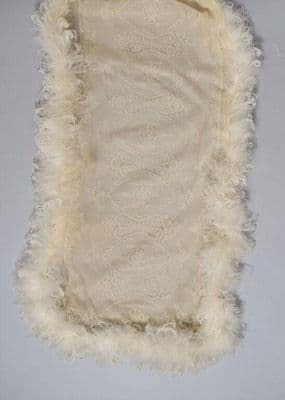
Cream Silk Chiffon Scarf with Machine Lace
Belle Epoque · 1910s · French
Production
mass-produced
Material
silk chiffon
Culture
French
Influences
Kashmir shawl tradition
A delicate rectangular silk chiffon scarf featuring an intricate paisley pattern woven or printed into the translucent fabric. The scarf is bordered on all sides with machine-made silk lace trim that creates a decorative fringe edge. The chiffon appears lightweight and semi-transparent, with the paisley motifs creating subtle textural variation across the surface. The machine lace edging shows consistent, repetitive patterns typical of early 20th century mechanical production. The overall construction demonstrates the Belle Epoque preference for refined feminine accessories that combined industrial efficiency with decorative sophistication.
scarf
Connected To
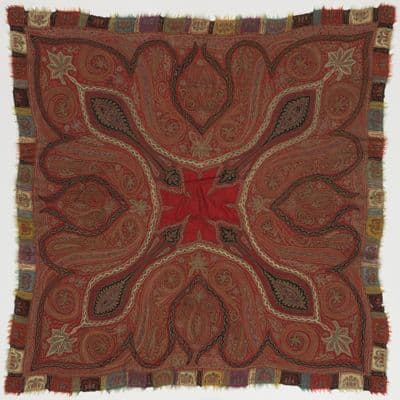
Influences·Kashmir shawl traditionFunction·formal-eveningMotif·paisley
SHARED110 years · cross-culture
These two pieces reveal how the paisley motif traveled from Kashmir looms to European luxury, transforming along the way. The red wool shawl displays the full-throated maximalism of authentic Kashmir work—those dense, interlocking teardrops creating a hypnotic mandala that commands attention from across a ballroom.
Text58%
Image69%
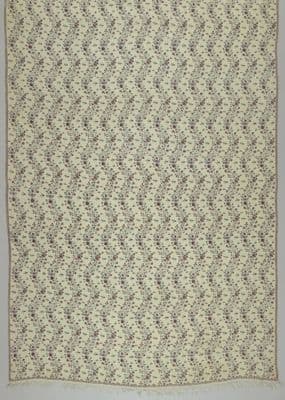
Influences·Kashmir shawl traditionFunction·formal-eveningMotif·paisley
SHARED80 years · cross-culture
These two pieces trace the evolution of the paisley from its original Kashmir incarnation to its Belle Époque afterlife. The wool shawl displays the classic teardrop motifs in their full, dense glory—burgundy and sage paisleys marching across cream wool in the traditional Indian manner that made these shawls the ultimate status symbol of the Romantic era.
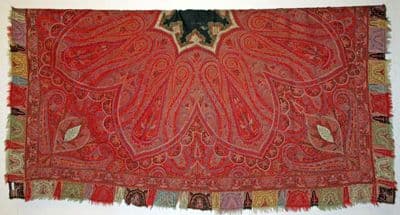
Influences·Kashmir shawl traditionFunction·formal-eveningMotif·paisley
SHARED30 years · cross-culture
These two accessories reveal how the paisley motif traveled from Kashmir looms to European drawing rooms, then fractured into delicate echoes. The red wool shawl carries the full weight of the original tradition — those bold, curvilinear paisleys dominating the field like architectural statements, while the cream chiffon scarf whispers the same teardrop forms in barely-there machine lace, as if the pattern had been dissolved in champagne.
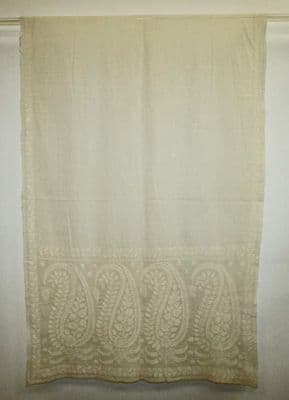
Influences·Kashmir shawl traditionTechnique·machine-weavingMotif·paisley
SHARED90 years · cross-culture
These two scarves trace the long afterlife of the Kashmir shawl's paisley motif, from its 19th-century American cotton democratization to its Belle Époque French silk refinement. The earlier piece shows the paisley border treatment that made exotic Indian textiles accessible to middle-class Americans, while the later scarf dissolves those same teardrop forms into gossamer machine lace—paisley as whisper rather than statement.
Pull the Thread→
Follow this garment wherever the graph leads