THE MET
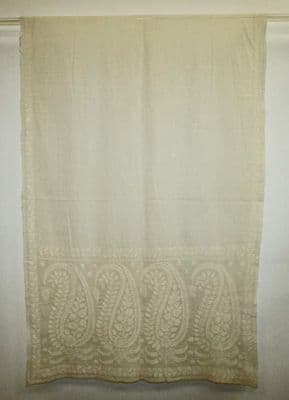
Cream Cotton Scarf with Paisley Border
Romantic · 1820s · American
Production
handmade
Material
cotton
Culture
American
Influences
Kashmir shawl tradition · Indian paisley motifs
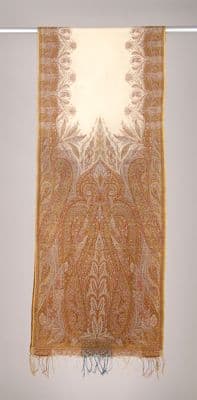
A rectangular cotton scarf displaying characteristic early 19th-century American textile production. The cream-colored ground fabric features a substantial woven or embroidered paisley border along one end, with repeating teardrop motifs arranged in a continuous band. The paisley designs show the influence of Indian Kashmir shawl patterns that became popular during the Romantic period. The cotton construction reflects American textile manufacturing capabilities of the 1820s-1830s, when domestic cotton production was expanding. The scarf's proportions suggest it was designed to be worn draped over the shoulders or around the neck, complementing the flowing silhouettes favored during the Romantic era. The monochromatic cream palette and geometric precision of the paisley border demonstrate the adaptation of exotic Eastern motifs to American tastes and production methods.
scarf
Connected To
Influences·Indian paisley motifsInfluences·Kashmir shawl traditionMotif·paisley
SHARED10 years · cross-culture
These two scarves trace the long journey of the paisley motif from its origins in Kashmir shawls to mass-market accessibility. The first piece, with its dense, flame-like paisleys rendered in rich browns against cream wool, carries the weight of the original tradition—those intricate boteh patterns that made Kashmir shawls the ultimate luxury good in 19th-century Europe.
Text76%
Image86%
Influences·Indian paisley motifsTechnique·machine-weavingMotif·paisley
SHARED140 years · cross-culture · cross-category
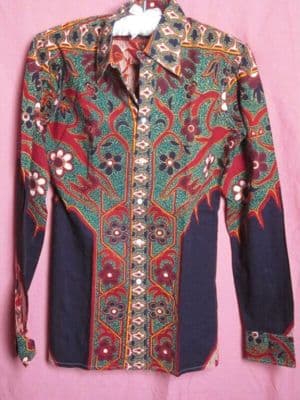
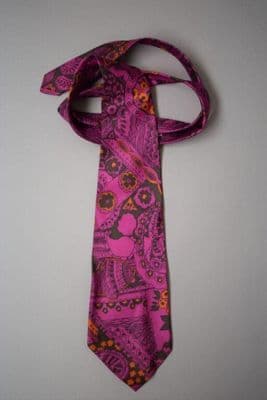
That delicate cream cotton with its restrained paisley border and the acid-bright silk tie exploding with psychedelic paisleys represent the same Indian motif's wildly different cultural journeys. The 19th-century scarf speaks to the genteel colonial appetite for "exotic" patterns rendered safe and suitable for drawing rooms, while the 1970s tie screams of counterculture's embrace of Eastern mysticism filtered through a kaleidoscope of LSD-inspired color.
Influences·Kashmir shawl traditionTechnique·machine-weavingMotif·paisley
SHARED90 years · cross-culture
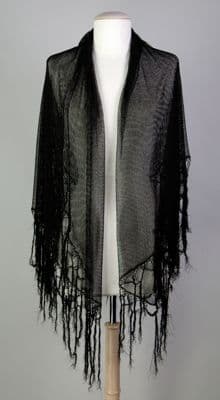
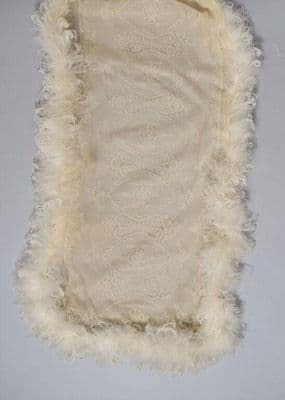
These two scarves trace the long afterlife of the Kashmir shawl's paisley motif, from its 19th-century American cotton democratization to its Belle Époque French silk refinement. The earlier piece shows the paisley border treatment that made exotic Indian textiles accessible to middle-class Americans, while the later scarf dissolves those same teardrop forms into gossamer machine lace—paisley as whisper rather than statement.
Influences·Kashmir shawl traditionMotif·paisley
SHARED60 years · cross-culture
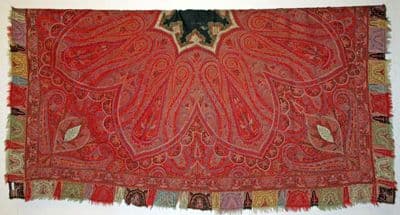
The paisley motif travels here from Kashmir's luxury shawl tradition to American cotton practicality, but notice how the journey changes everything about scale and intention. The Victorian red wool shawl commands attention with its dense, almost obsessive paisley coverage and rich gold threading—this is paisley as status symbol, meant to broadcast wealth and worldliness.
Echoes Across Time
Romantic → 1970s · 140yr69%
SHARED
That delicate cream cotton with its restrained paisley border and the acid-bright silk tie exploding with psychedelic paisleys represent the same Indian motif's wildly different cultural journeys. The 19th-century scarf speaks to the genteel colonial appetite for "exotic" patterns rendered safe and suitable for drawing rooms, while the 1970s tie screams of counterculture's embrace of Eastern mysticism filtered through a kaleidoscope of LSD-inspired color.
Influences·Indian paisley motifsTechnique·machine-weavingMotif·paisley
Pull the Thread→
Follow this garment wherever the graph leads