THE MET
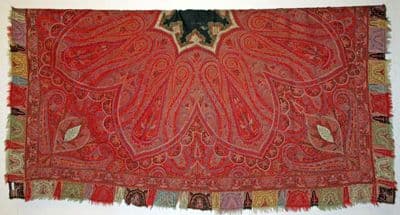
Deep Red Wool Paisley Shawl with Gold Detailing
Victorian Late / Bustle · 1860s-1880s · Indian
Production
handmade
Material
wool
Culture
Indian
Movement
Orientalism
Influences
Kashmir shawl tradition · Mughal textile patterns
A large rectangular wool shawl featuring the classic paisley motif in deep red with gold detailing. The central field displays symmetrical paisley patterns arranged in mirror formation, creating an elaborate teardrop design. The border consists of multiple decorative bands in contrasting colors including green and cream geometric patterns. The shawl shows characteristic Kashmir weaving techniques with fine wool construction and intricate woven patterns rather than printed designs. Fringed edges complete the traditional format. This represents the height of Victorian fascination with Indian textiles, when such shawls were prized luxury items in European wardrobes.
scarf
Connected To
Influences·Kashmir shawl traditionFunction·formal-eveningMotif·paisley
SHARED30 years · cross-culture
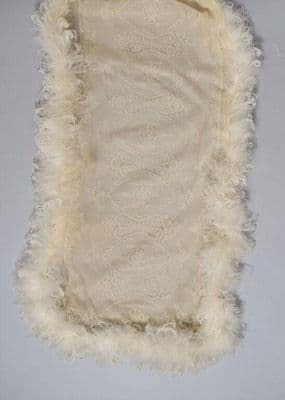
These two accessories reveal how the paisley motif traveled from Kashmir looms to European drawing rooms, then fractured into delicate echoes. The red wool shawl carries the full weight of the original tradition — those bold, curvilinear paisleys dominating the field like architectural statements, while the cream chiffon scarf whispers the same teardrop forms in barely-there machine lace, as if the pattern had been dissolved in champagne.
Text64%
Image72%
Influences·Kashmir shawl traditionMotif·paisley
SHARED60 years · cross-culture
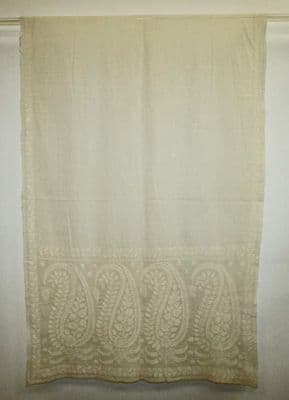
The paisley motif travels here from Kashmir's luxury shawl tradition to American cotton practicality, but notice how the journey changes everything about scale and intention. The Victorian red wool shawl commands attention with its dense, almost obsessive paisley coverage and rich gold threading—this is paisley as status symbol, meant to broadcast wealth and worldliness.
61%
Influences·Kashmir shawl tradition
SHAREDsame era · cross-culture
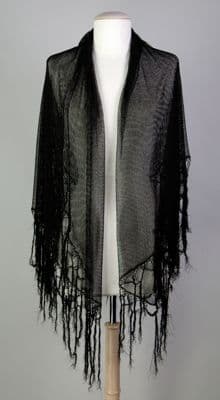
These two Victorian shawls reveal how the Kashmir shawl craze split into distinct aesthetic camps by the 1870s. The red wool piece clings faithfully to its Indian origins with those unmistakable teardrop paisleys flowing across the field like liquid fire, while the black silk version has stripped away all Eastern ornament in favor of a geometric, almost Art Nouveau sensibility that feels decades ahead of its time.
Movement·Orientalism
SHARED70 years · cross-culture · cross-category
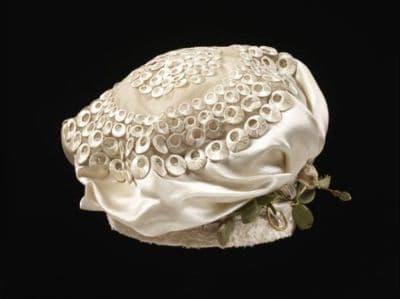
The sinuous paisley motifs cascading across this Victorian shawl and the sculptural turban silhouette of the Regency hat are separated by seven decades but united by Europe's persistent fascination with "the Orient." Where the earlier turban borrows wholesale from Ottoman court dress—that silk satin twisted and draped to mimic a pasha's headwear—the later shawl represents the full domestication of Eastern exoticism, transforming Kashmir's ancient boteh pattern into parlor-ready luxury.
Pull the Thread→
Follow this garment wherever the graph leads