V&A
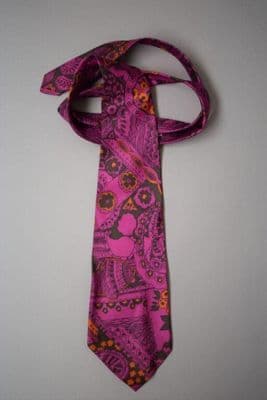
Psychedelic Paisley Printed Silk Necktie
1970s · 1960s · British
Production
ready-to-wear
Material
printed silk
Culture
British
Movement
Psychedelic Movement · Hippie / Counterculture
Influences
psychedelic art movement · Indian paisley motifs
A silk necktie featuring an intricate psychedelic paisley pattern in vibrant magenta, purple, orange, and black. The design incorporates swirling paisley motifs, geometric elements, and abstract organic forms characteristic of 1960s counterculture aesthetics. The tie appears to be machine-printed silk with a standard width typical of the era. The complex, densely packed pattern creates an optical effect with overlapping curved and angular shapes. The fabric has a smooth silk finish that allows the saturated colors to appear particularly vivid. This represents the period's embrace of bold, non-conformist fashion that challenged traditional menswear conventions through psychedelic-inspired textile design.
tie
Connected To
Influences·Indian paisley motifsTechnique·machine-weavingMotif·paisley
SHARED140 years · cross-culture · cross-category
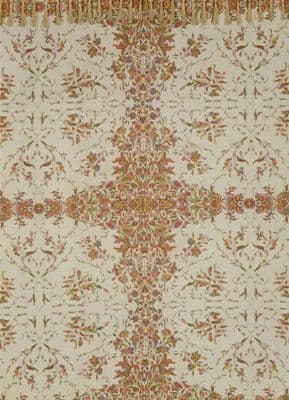
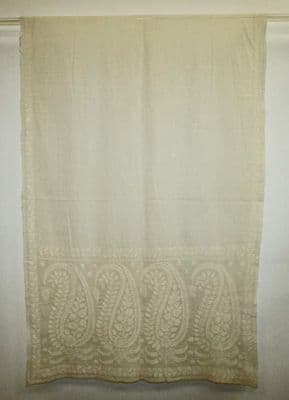
That delicate cream cotton with its restrained paisley border and the acid-bright silk tie exploding with psychedelic paisleys represent the same Indian motif's wildly different cultural journeys. The 19th-century scarf speaks to the genteel colonial appetite for "exotic" patterns rendered safe and suitable for drawing rooms, while the 1970s tie screams of counterculture's embrace of Eastern mysticism filtered through a kaleidoscope of LSD-inspired color.
Text63%
Image76%
Movement·Hippie / CountercultureTechnique·machine-weavingTechnique·screen-printing
SHARED10 years · cross-culture · cross-category
Movement·Hippie / CountercultureTechnique·screen-printing
SHARED10 years · cross-culture · cross-category
Text53%
Technique·screen-printingFunction·protest-subculture
SHARED50 years · cross-category
Text50%
Echoes Across Time
Romantic → 1970s · 140yr69%
SHARED
That delicate cream cotton with its restrained paisley border and the acid-bright silk tie exploding with psychedelic paisleys represent the same Indian motif's wildly different cultural journeys. The 19th-century scarf speaks to the genteel colonial appetite for "exotic" patterns rendered safe and suitable for drawing rooms, while the 1970s tie screams of counterculture's embrace of Eastern mysticism filtered through a kaleidoscope of LSD-inspired color.
Influences·Indian paisley motifsTechnique·machine-weavingMotif·paisley
Pull the Thread→
Follow this garment wherever the graph leads