V&A
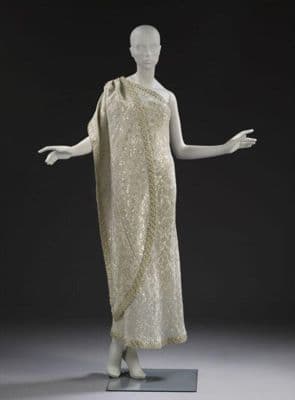
Champagne Gold Silk Brocade Sari Evening Dress
1970s · 1960s · French
Designer
Cristóbal Balenciaga
Production
haute couture
Material
silk brocade
Culture
French
Movement
Orientalism · Hippie / Counterculture
Influences
Indian sari draping · Ancient Greek chiton
This floor-length evening dress demonstrates Balenciaga's masterful interpretation of Indian sari draping techniques within haute couture construction. The garment features a straight, columnar silhouette that falls from one shoulder in classical Greek-inspired asymmetry. The silk brocade fabric displays an all-over metallic pattern that catches light across its surface. Lesage's beaded and sequined embellishment creates textural richness along the draped edge and neckline. The dress requires no structured undergarments, relying instead on the weight and drape of the brocaded silk to create its elegant line. This piece exemplifies 1960s high fashion's fascination with non-Western dress forms, translating the sari's wrap-and-drape methodology into European evening wear through Balenciaga's architectural approach to garment construction.
dresscolumnone shoulderfloor length
Connected To
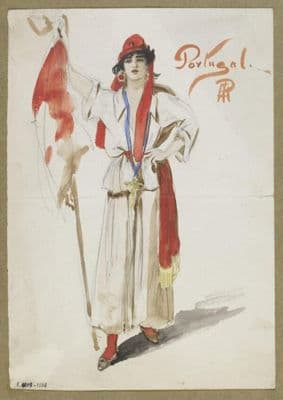
Movement·OrientalismTechnique·draping
SHARED40 years · cross-culture · cross-category
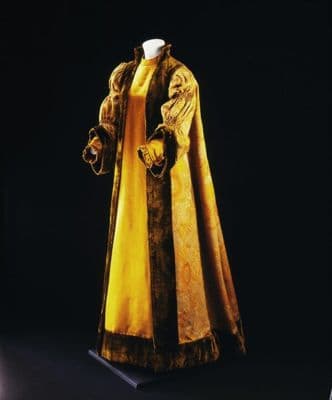
Both garments ride the same wave of Western fashion's enduring romance with Eastern drapery, but they capture different moments in that long affair. The 1920s theatrical coat wraps its wearer in billowing silk that suggests both kimono sleeves and Middle Eastern robes, complete with that jaunty turban and the kind of orientalist fantasy that made Poiret famous.
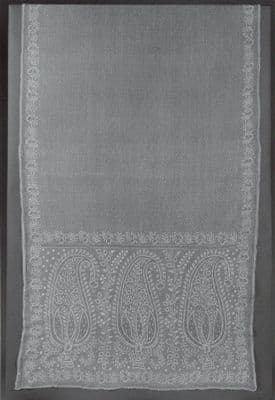
Pull the Thread→
Follow this garment wherever the graph leads