V&A
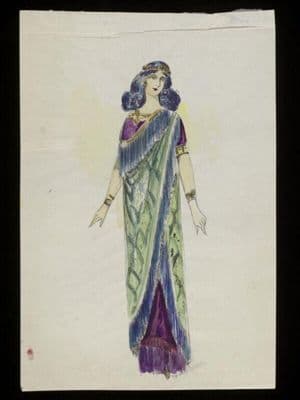
Sage Green Silk Indian Style Theatrical Sari
Roaring Twenties / Art Deco · 1920s · French
Designer
Jean-Charles Worth
Production
one-of-a-kind
Material
silk
Culture
French
Movement
Orientalism
Influences
Indian sari draping · Orientalist costume design
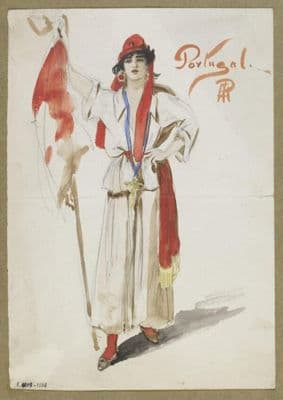
This costume design depicts a Western interpretation of an Indian sari for theatrical use. The garment features a sage green silk fabric draped in the traditional sari style, with a deep purple underskirt visible beneath. Gold decorative elements accent the draping, including what appears to be metallic trim or embroidery along the borders. The figure wears matching purple arm ornaments and a decorative headpiece with jeweled elements. The draping follows classical sari construction with the fabric wrapped around the waist and draped over one shoulder, though stylized for stage presentation. The design reflects 1920s Orientalist fashion trends, where Eastern garments were adapted for Western theatrical and fancy dress purposes, combining authentic draping techniques with European aesthetic sensibilities.
dressfloor length
Connected To
Movement·OrientalismTechnique·drapingFunction·performance-costume
Pull the Thread→
Follow this garment wherever the graph leads