African Traditional · 2010s · Senegalese
Production
artisan-craft
Material
PVC coated polyester
Culture
Senegalese
Movement
Afrofuturism
Influences
West African boubou silhouette · contemporary performance art
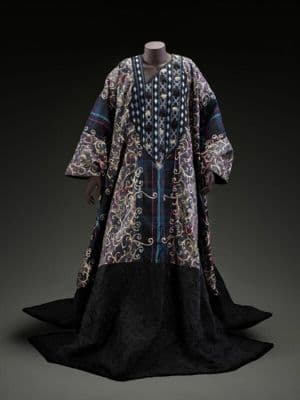
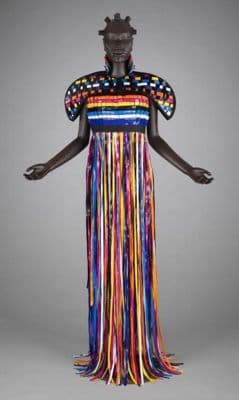
This contemporary dress features a fitted bodice with short sleeves constructed from multicolored striped fabric in red, blue, yellow, and white. The most striking element is the dramatic cascade of long, thin streamers or ribbons that flow from the waistline to the floor, creating a waterfall effect of vibrant colors. The streamers appear to be made from the same PVC-coated polyester material, giving them a glossy, synthetic finish that catches light. The construction combines traditional African dress silhouettes with modern synthetic materials, creating a piece that bridges cultural heritage with contemporary fashion innovation. The crown-like headpiece complements the regal presentation of this performance garment.


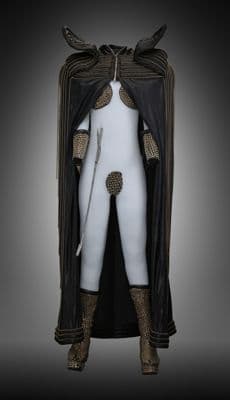
These two garments reveal how Afrofuturism travels across continents and decades, translating ancient ceremonial power into space-age prophecy. The white bodysuit's metallic breast plates and cape echo the rigid geometric patterning and ritualistic drama of the Senegalese dress, but where the traditional garment grounds its wearer in cascading earthbound fringe, the 1970s piece launches the body skyward with that theatrical cape and gleaming armor-like details.
Follow this garment wherever the graph leads
These two garments reveal how Afrofuturism travels across continents and decades, translating ancient ceremonial power into space-age prophecy. The white bodysuit's metallic breast plates and cape echo the rigid geometric patterning and ritualistic drama of the Senegalese dress, but where the traditional garment grounds its wearer in cascading earthbound fringe, the 1970s piece launches the body skyward with that theatrical cape and gleaming armor-like details.
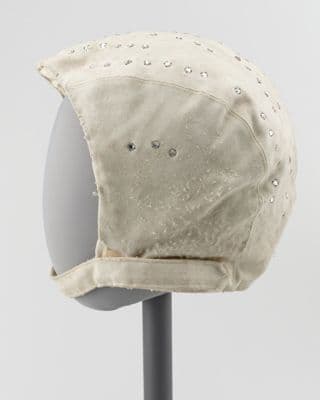
The cream skull cap's constellation of studs and the Senegalese dress's electric ribbons of PVC both transform synthetic materials into something ceremonial, something that catches light and commands attention. Forty years separate them, but they share the same radical gesture: taking industrial materials—synthetic fiber, plastic coating—and turning them into vessels for cultural expression and performance.
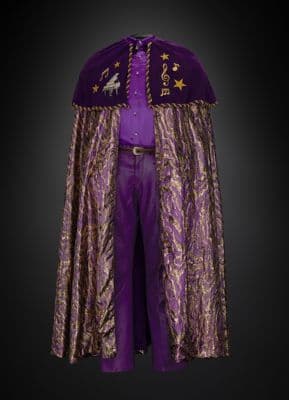
That purple leather cape with its geometric cutouts and ritual-like presence speaks the same Afrofuturist language as the PVC ceremonial dress below it, both transforming the body into something between ancestor and android. The cape's metallic studs and architectural draping echo the dress's reflective stripes and structured bodice—each piece using industrial materials to reimagine traditional African ceremonial wear for a space-age diaspora.
Both garments pulse with the electric current of Afrofuturism, but they speak different dialects of the same language. The Senegalese dress transforms traditional ceremonial robes into something that could have beamed down from a spacecraft—those glossy PVC stripes in neon pink, blue, and yellow catch light like a disco ball, while rainbow ribbons cascade from the bodice like digital waterfalls.


The cream skull cap's constellation of studs and the Senegalese dress's electric ribbons of PVC both transform synthetic materials into something ceremonial, something that catches light and commands attention. Forty years separate them, but they share the same radical gesture: taking industrial materials—synthetic fiber, plastic coating—and turning them into vessels for cultural expression and performance.