SMITHSONIAN
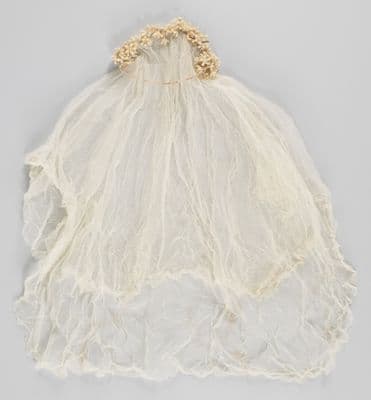
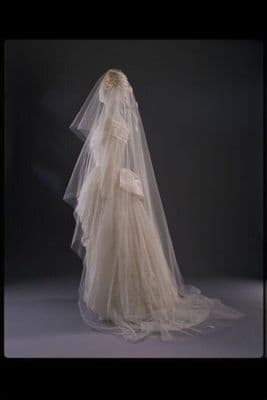
Ivory Synthetic Net Wedding Veil with Cream Flowers
Great Depression · 1930s · African American
Production
handmade
Material
synthetic net
Culture
African American
Influences
1930s romantic bridal styling
A mid-length wedding veil constructed from fine synthetic net tulle, gathered at the crown with an ornate headpiece of cream-colored silk or fabric flowers. The veil falls in multiple tiers, creating a soft, voluminous silhouette that would frame the bride's shoulders and upper back. The floral crown piece features clustered blooms arranged in a circular band, typical of 1930s bridal accessories that emphasized romantic femininity during economically challenging times. The synthetic material reflects the era's embrace of new textile technologies while maintaining traditional bridal aesthetics. The construction shows careful gathering techniques that create gentle fullness without excessive bulk.
headband/head covering/hair accessory
Connected To
61%
Worn with·wedding gownFunction·wedding
SHARED90 years · cross-culture
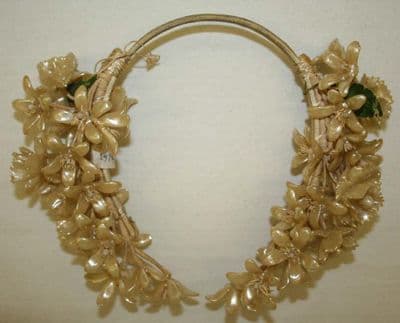
These two bridal headdresses reveal how the essential vocabulary of wedding adornment—cascading florals, pale tones, delicate construction—persists across nearly a century and vastly different economic circumstances.
Text76%
Image75%
Entity29%
Worn with·headpieceTechnique·applique
SHARED80 years · cross-culture · cross-category
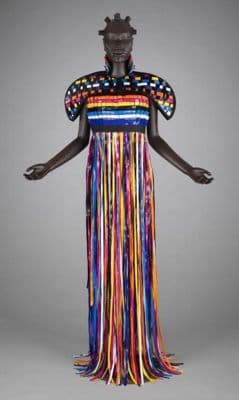
These two ceremonial garments reveal how synthetic materials have democratized ritual dress across cultures and decades. The Depression-era veil transforms cheap synthetic net into bridal luxury through carefully applied cream flowers, while the Senegalese dress elevates industrial PVC strips into cascading ceremonial fringe that catches light like precious beads.
Worn with·wedding gownFunction·wedding
SHARED50 years · cross-culture
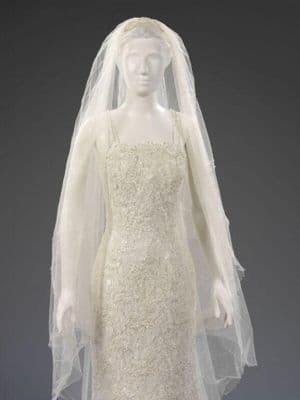
These veils share the bride's eternal desire to float down the aisle wrapped in gossamer dreams, but they tell vastly different stories about how those dreams get made real. The 1990s cathedral veil cascades in pristine tulle layers that pool extravagantly on the floor—a monument to abundance that assumes endless fabric and professional preservation.
Worn with·wedding gownFunction·wedding
SHARED50 years · cross-culture · cross-category
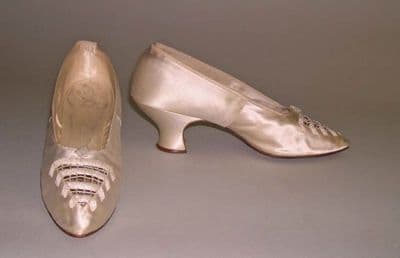
These pale pink satin slippers with their delicate ruched trim and the ivory veil crowned with cream silk flowers are separated by fifty years and vastly different economic realities, yet both speak to the same fierce determination to claim bridal elegance.
Pull the Thread→
Follow this garment wherever the graph leads