THE MET
Cream Silk Floral Bridal Headdress with Cascading Flowers
Victorian Early / Crinoline · 1840s · American
Production
handmade
Material
silk
Culture
American
Influences
Romantic era botanical fashion · Victorian language of flowers
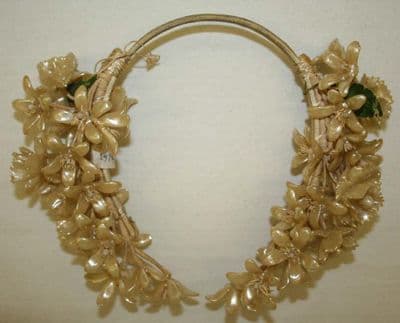
A delicate bridal headdress constructed on a narrow band base with cascading silk floral ornaments. The piece features densely clustered small flowers and leaves in cream-colored silk, creating dimensional clusters that drape gracefully around the head. The flowers appear to be hand-constructed with individual petals, likely using silk organza or similar lightweight fabric. The ornaments are attached to create a naturalistic cascading effect, with varying heights and densities. This type of elaborate floral headdress was characteristic of 1840s bridal fashion, when brides favored romantic, nature-inspired accessories that complemented the era's emphasis on feminine delicacy and botanical motifs.
headband/head covering/hair accessory
Connected To
63%
Worn with·wedding veilFunction·wedding
SHARED90 years · cross-culture
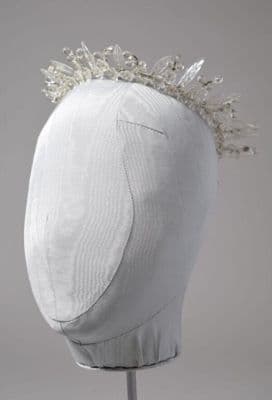
These bridal wreaths reveal how economic necessity can crystallize design into its purest form. The Victorian silk confection spills with hand-sewn blossoms and trailing ribbons—a testament to leisure time and skilled needlework—while the Depression-era French piece strips the idea down to molded glass buds that catch light like dewdrops.
Text64%
Image72%
Entity32%
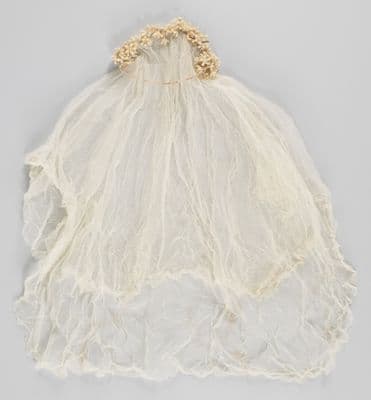
61%
Worn with·wedding gownFunction·wedding
SHARED90 years · cross-culture
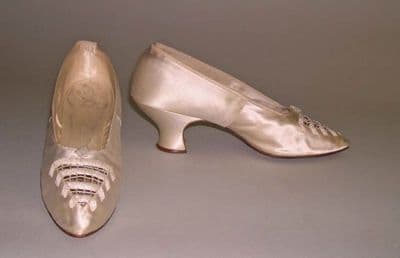
These two bridal headdresses reveal how the essential vocabulary of wedding adornment—cascading florals, pale tones, delicate construction—persists across nearly a century and vastly different economic circumstances.
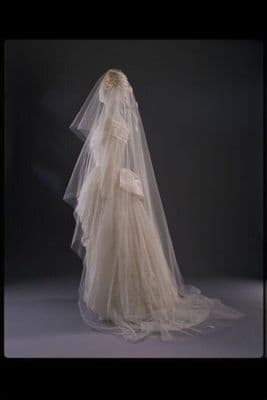
59%
Worn with·wedding gownFunction·wedding
SHARED140 years · cross-culture
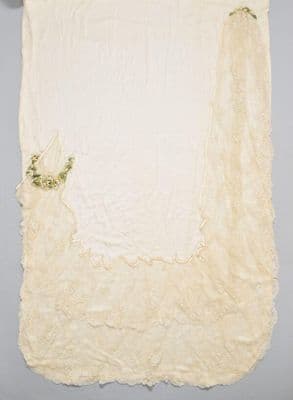
That Victorian headdress with its silk flowers cascading like a golden waterfall and the 1990s cathedral veil flowing behind the bride are both exercises in bridal theater, just staged differently. The headdress frames the face with botanical abundance—those layered blooms creating a halo effect that says "fertile goddess"—while the veil extends the bride's silhouette into pure ethereal territory, transforming her into a walking cloud.
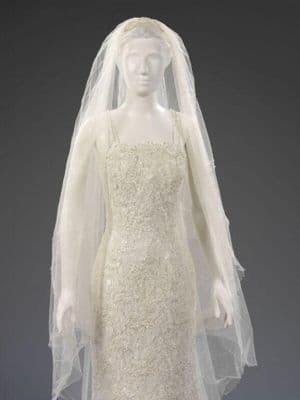
59%
Worn with·wedding gownFunction·wedding
SHARED150 years · cross-culture
The Victorian headdress cascades silk flowers like nature's own bridal crown, each bloom hand-crafted to frame the face with botanical abundance, while the 1990s cathedral veil chooses ethereal simplicity—yards of tulle that pool and billow with architectural drama. Both pieces understand that a bride's head is sacred real estate, but where the earlier era demanded ornate craftsmanship that could be admired up close, the modern veil creates presence through sheer scale and movement.
Pull the Thread→
Follow this garment wherever the graph leads