V&A
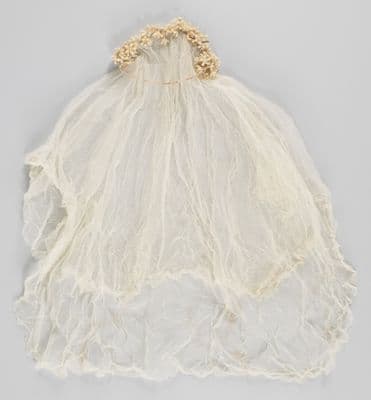
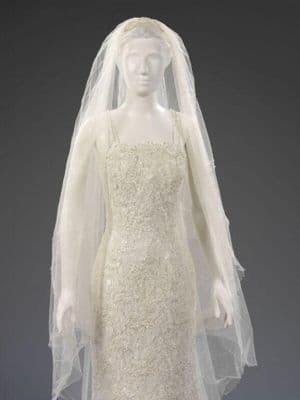
Ivory Tulle Cathedral Length Wedding Veil
1990s · 1990s · British
Designer
Deborah Miner
Production
one-of-a-kind
Material
tulle
Culture
British
Movement
Supermodel Era
Influences
Victorian cathedral veil tradition
A cathedral-length wedding veil crafted from fine ivory tulle that cascades dramatically from the crown to floor length and beyond. The veil appears to be constructed from multiple layers of lightweight tulle, creating subtle volume and movement. The fabric has a soft, translucent quality typical of bridal tulle, with gentle gathering at the attachment point. The veil's generous proportions and flowing silhouette reflect late 1990s bridal fashion, when voluminous veils were favored for their romantic, ethereal effect. The construction appears machine-finished with clean edges, consistent with commercial bridal production methods of the era.
headband/head covering/hair accessoryfloor length
Connected To
Worn with·wedding gownTechnique·drapingFunction·wedding
SHARED70 years · cross-category
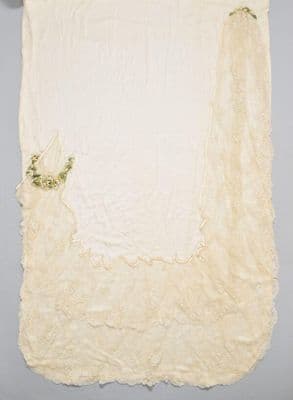
These two pieces trace the evolution of bridal drama from the body outward—the 1920s train hugs close with its liquid silk charmeuse and delicate scalloped edges, creating a puddle of ivory that follows the bride's every step, while the 1990s cathedral veil floats like a cloud, its sheer tulle designed to catch light and air rather than cling to form.
Echoes Across Time
Roaring Twenties / Art Deco → 1990s · 70yr62%
SHARED
These two pieces trace the evolution of bridal drama from the body outward—the 1920s train hugs close with its liquid silk charmeuse and delicate scalloped edges, creating a puddle of ivory that follows the bride's every step, while the 1990s cathedral veil floats like a cloud, its sheer tulle designed to catch light and air rather than cling to form.
Worn with·wedding gownTechnique·drapingFunction·wedding
Pull the Thread→
Follow this garment wherever the graph leads