V&A
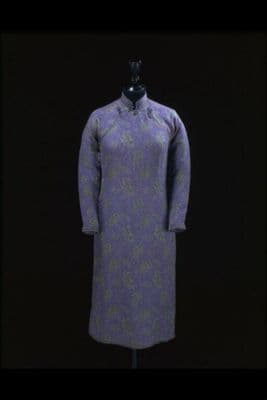
Lavender Synthetic Crêpe Qipao with Gold Patterns
1950s · 1950s · Hong Kong Chinese
Production
ready-to-wear
Material
synthetic crêpe
Culture
Hong Kong Chinese
Movement
New Look / Post-War
Influences
1930s Shanghai qipao · traditional Chinese robe construction
A fitted qipao dress in lavender synthetic crêpe featuring intricate gold supplementary warp and weft patterns throughout the fabric. The dress displays the classic qipao silhouette with a high mandarin collar, fitted bodice that follows the natural waistline, and a straight skirt extending to mid-calf length. Long fitted sleeves taper to the wrists. The garment demonstrates precise tailoring with side seam construction and appears to have traditional pankou button closures along the right side. The supplementary weaving technique creates raised gold motifs against the purple ground, likely featuring traditional Chinese decorative elements. This represents the modernized qipao of the 1950s Hong Kong period, when synthetic fabrics allowed for new interpretations of traditional Chinese dress forms.
dressstraighthigh neckknee length
Connected To
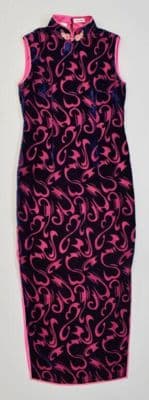
Influences·1930s Shanghai qipaoFunction·cultural-heritage
SHARED50 years · cross-culture
These two qipao reveal how the same silhouette can carry vastly different cultural weight across decades. The 1950s lavender dress, with its demure long sleeves and delicate gold florals on synthetic crêpe, speaks to Hong Kong's postwar reinvention of Shanghai glamour—practical yet nostalgic, using new materials to preserve old forms.
Pull the Thread→
Follow this garment wherever the graph leads