V&A
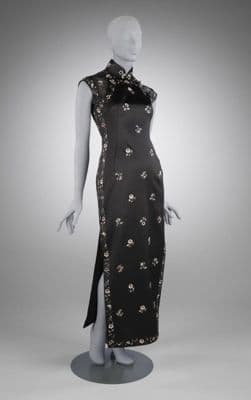
Black Silk Satin Qipao with Gold Embroidery
2010s · 2010s · Chinese
Designer
Guo Yujun and Xu Yulin for GUO XU
Production
ready-to-wear
Material
silk satin
Culture
Chinese
Movement
Neo-Chinese fashion · Dark Academia
Influences
1930s Shanghai qipao · traditional Chinese dress
A sleek black qipao featuring the traditional high mandarin collar and asymmetrical side closure with fabric-covered buttons. The dress follows a slim, body-conscious silhouette that extends to ankle length with a high side slit. Small gold floral motifs are scattered across the black silk satin surface in an all-over pattern. The garment demonstrates contemporary interpretation of the classic Chinese cheongsam, maintaining traditional structural elements like the fitted bodice and straight-line construction while incorporating modern proportions. The silk satin creates a lustrous surface that enhances the contrast between the dark ground and metallic embroidered details.
dresstight fithigh neckmaxi
Connected To
Influences·1930s Shanghai qipao
SHARED60 years · cross-culture
These two qipaos reveal how the same silhouette can carry completely different cultural weight across six decades. The 1950s lavender dress speaks to Hong Kong's postwar optimism—its synthetic crêpe and cheerful color reflecting a moment when the qipao was still everyday wear, practical enough for synthetic fabric yet special enough for delicate gold patterning.
Echoes Across Time
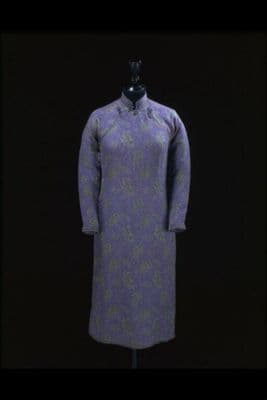
2010s → 1950s · 60yr64%
SHARED
These two qipaos reveal how the same silhouette can carry completely different cultural weight across six decades. The 1950s lavender dress speaks to Hong Kong's postwar optimism—its synthetic crêpe and cheerful color reflecting a moment when the qipao was still everyday wear, practical enough for synthetic fabric yet special enough for delicate gold patterning.
Influences·1930s Shanghai qipao
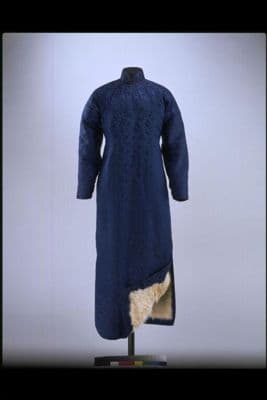
Great Depression → 2010s · 80yr37%
Pull the Thread→
Follow this garment wherever the graph leads