V&A
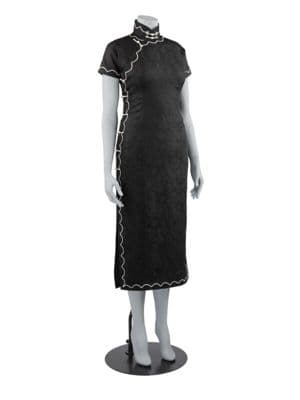
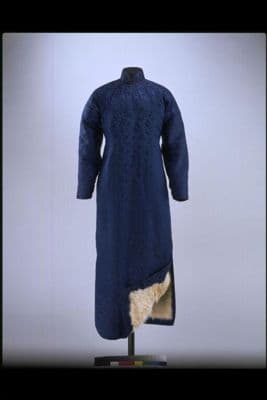
Navy Blue Silk Damask Qipao Dress
Great Depression · 1930s · Chinese
Production
ready-to-wear
Material
silk damask
Culture
Chinese
Movement
Chinese fashion modernization
Influences
traditional Chinese qipao · 1930s international fashion
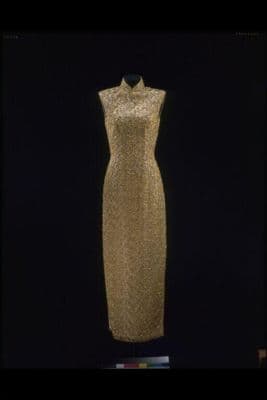
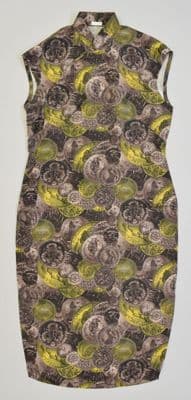
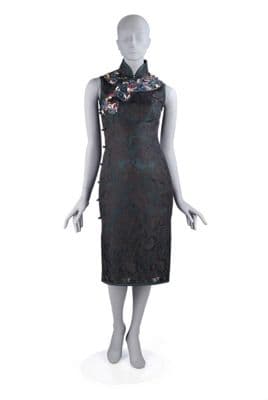
This navy blue silk damask qipao features the characteristic high mandarin collar and fitted silhouette that defined 1930s Chinese women's formal wear. The dress displays a straight, column-like cut that skims the body without excessive tailoring, typical of the modernized qipao style that emerged in urban China during this period. The silk damask fabric shows a subtle woven pattern that creates textural interest across the surface. The garment extends to approximately mid-calf length and features long fitted sleeves. A cream-colored lining is visible at the hem opening, indicating quality construction. The overall design represents the fusion of traditional Chinese dress elements with contemporary 1930s international fashion sensibilities, reflecting the cultural modernization occurring in Chinese urban centers during this era.
dressstraighthigh neckmidi
Connected To
Influences·traditional Chinese qipaoFunction·court-formal
SHAREDcross-culture
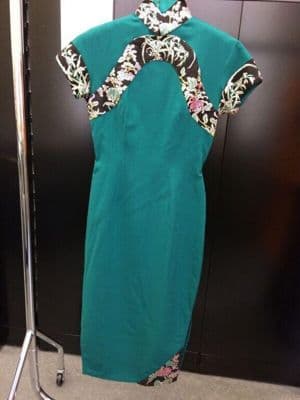
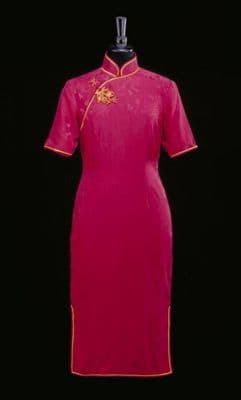
These two qipaos reveal how the same silhouette traveled through decades and social strata, adapting to circumstance while holding its essential DNA. The 1930s navy damask version speaks to pre-war prosperity with its luxurious silk and traditional high collar, while the 1950s teal wool piece shows the garment's democratic evolution—embroidered florals replacing costly damask, practical wool substituting for silk, yet maintaining that signature body-skimming fit and side closure.
Echoes Across Time
Traditional Chinese → Great Depression · 50yr59%
SHARED
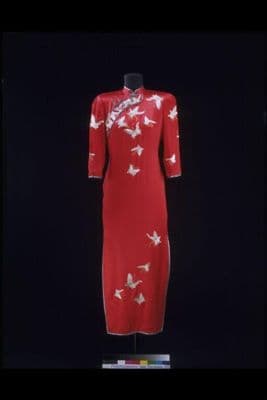
Both dresses trace their lineage to the qipao's essential grammar—that body-skimming column with its signature side closure—but they speak different dialects of desire. The red silk version floats white butterflies across its surface like scattered thoughts, while the navy damask relies on woven texture alone, its somber elegance suggesting the kind of restraint that comes from economic uncertainty.
Influences·traditional Chinese qipao
Great Depression → Chinese Traditional
Pull the Thread→
Follow this garment wherever the graph leads