V&A
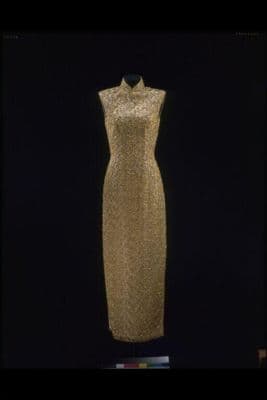
Golden Metallic Lace Qipao Evening Dress
Traditional Chinese · 1960s · Hong Kong
Production
handmade
Material
lace with gilt threads
Culture
Hong Kong
Influences
traditional Chinese qipao · 1960s column dress
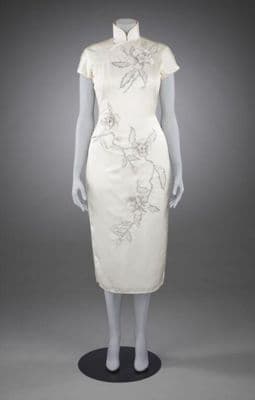
A floor-length qipao featuring a high mandarin collar and sleeveless construction in golden metallic lace. The dress follows a strict columnar silhouette that skims the body closely from bust to hem without flare. The lace appears to have an allover geometric or floral pattern created with gilt threads that catch light across the surface. The high neckline is characteristic of traditional qipao styling, while the sleeveless cut and floor-length proportions reflect 1960s formal wear adaptations. The metallic finish gives the garment a modern, space-age quality typical of late 1960s evening wear, bridging traditional Chinese dress construction with contemporary Western formal fashion.
dresspencilhigh neckfloor length
Connected To
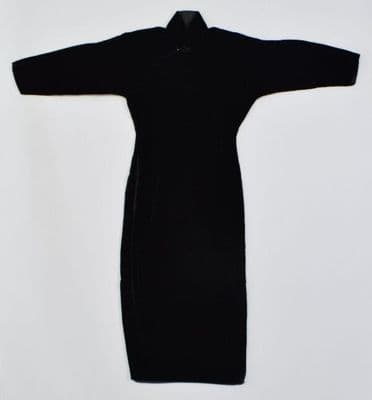
Influences·traditional Chinese qipaoFunction·formal-evening
SHARED10 years · cross-culture
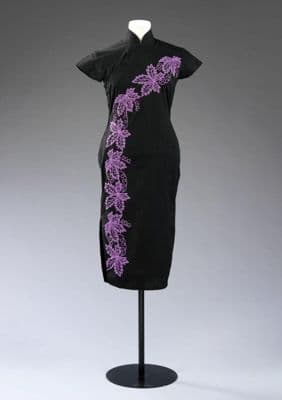
The black velvet qipao's severe geometry—that razor-straight silhouette and high mandarin collar—anticipates the gold lace version's sleek minimalism by a decade, proving the cheongsam's genius lies in its architectural restraint. While the earlier dress relies on velvet's plush darkness for drama, the later Hong Kong interpretation achieves the same body-skimming effect through metallic lace that catches light like chainmail.
Echoes Across Time
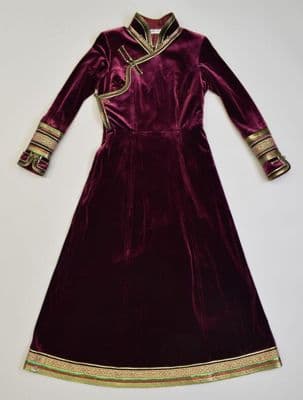
2000s → Traditional Chinese · 40yr58%
SHARED
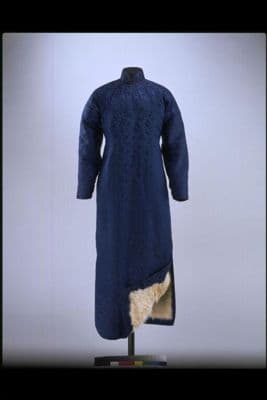
The burgundy velvet robe reads like qipao DNA filtered through Western loungewear—that high mandarin collar and fitted waist echoing the classic silhouette, but stretched into a house dress length with European gold braiding that feels more Habsburg than Han dynasty. The golden lace qipao beside it shows the same template in its purest form: that body-skimming column, the demure high neck, the side-slit discipline that defines the garment's geometry.
Influences·traditional Chinese qipao
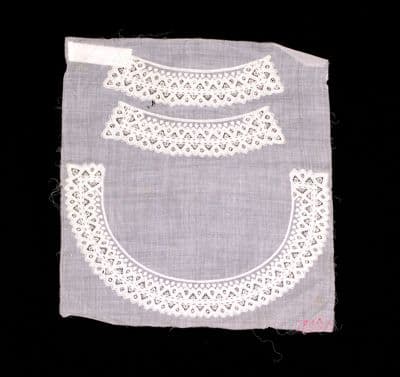
Victorian Early / Crinoline → Traditional Chinese
Pull the Thread→
Follow this garment wherever the graph leads